

👻 Haunted place
Wrexham
A Welsh market city of water meadows and old lordships, where the deepest shadows belong to history rather than to any ghost story.
Photo: Wikipedia
Wrexham — Wrecsam in Welsh — sits in the north-east corner of Wales, caught between the Welsh mountains and the lower Dee Valley, with the English border in Cheshire close by. It is the largest settlement in North Wales, with a built-up area population of 44,785 at the 2021 census, and it was awarded city status in 2022.
The name itself is a puzzle that has never been fully solved. Most authorities read it as Old English for “Wryhtel's river meadow”, the “hamm” element pointing to the low-lying ground of the rivers Gwenfro and Clywedog. But Wryhtel has never been identified, and other readings have been offered: a settlement of the Wreocensæte people from the Wrekin, a “king's hamlet”, even a “village of wreaths”. The earliest record, from 1161, calls it Wristlesham and mentions a castle.
For a place this old — Mesolithic flint, Bronze Age burial mounds, Iron Age hill-forts along the upland-lowland line, a Roman civilian settlement at Plas Coch — you might expect a thick crop of ghost stories. In truth, the record we have here is a record of people, trade and hard history, and we would rather say so plainly.
Hauntings are told as reported — by owners, guests, guides and investigators — never as fact. The history underneath is often real, and sometimes tragic; we treat it with respect. Background from Wikipedia and the sources listed below.
The history behind the hauntings
Wrexham was probably founded before the 11th century, most likely during the Mercian advance westwards in the eighth century, on the flat ground above the meadows of the River Gwenfro. The Welsh kings of Powys reconquered the area in the 11th century, after which Wrexham formed an integral part of the Powys lordship of Maelor — which is why it does not appear in the Domesday Book of 1086. Under the princes of Powys Fadog it grew as a trading town and administrative centre; in 1202 Madoc ap Gruffydd Maelor, Lord of Dinas Brân, granted demesne lands in “Wrechcessham” to the abbey of Valle Crucis, and by 1220 we have the earliest reference to a church here.
After the death in battle of Llywelyn ap Gruffudd in 1282, Wrexham became part of the Marcher lordship of Bromfield and Yale, and by 1327 it was a market town — one of the largest settlements in Wales and a celebrated centre for Welsh craftsmen, famed in the 14th and 15th centuries for its bucklers, still listed as “wreckesham Buckelers” in the 1547 inventory of Henry VIII. In 1391 the town was wealthy enough to support a bard, a jester, a juggler, a dancer and a goldsmith. The main body of St Giles was rebuilt in the late 15th and early 16th centuries into one of the finest pieces of ecclesiastical architecture in Wales.
Darker chapters followed. In 1584 St Richard Gwyn, a local recusant schoolteacher and Welsh-language poet, was convicted of high treason for his Catholic beliefs and, on 15 October that year, hanged, drawn and quartered at the Beast Market; he was canonised by Pope Paul VI in 1970 among the Forty Martyrs of England and Wales. During the English Civil War the town served as military headquarters for both sides, and a quarter of its houses burned down in 1643 while troops were quartered here. In the 17th century Wrexham became a “Puritan Metropolis” under figures such as Morgan Llwyd, Vicar from 1645, and for a time was the largest settlement in Wales. The Industrial Revolution brought coal and lead mining, iron, steel, leather and brewing.
The ghosts of Wrexham
1 reported apparition, as the stories are told.
👻 Wrexham's absent ghosts
Across the old city centre, from St Giles to the Beast Market
Honesty first: the historical record we are working from contains no ghost stories for Wrexham — no named apparitions, no recorded sightings, no traditional hauntings attached to St Giles, to the castle recorded at “Wristlesham” in 1161, or to the streets of the medieval market town.
What the city does hold is a genuine memory of loss. The Beast Market is where St Richard Gwyn, a local schoolteacher and poet, was executed on 15 October 1584 for his Catholic faith; his feast day is 17 October. In 1643 a quarter of Wrexham's houses burned during the quartering of Civil War troops. These are real deaths and real hardships, and they deserve to be remembered as history rather than dressed up as entertainment.
Wrexham in photos
Click any photo to enlarge
📷 Been here? Add your photo
Visiting Wrexham
Modern Wrexham is a working city as much as a historic one — a centre for manufacturing, retail, education and administration serving North Wales and the Welsh borderlands. The obvious starting point is the Tudor church of St Giles, which towers over the historic city centre, followed by the National Trust property at Erddig and the nationally significant industrial heritage of the Clywedog Valley. Wrexham A.F.C. is one of the oldest professional football teams in the world.
The city lies between the Welsh mountains and the lower Dee Valley, close to the Cheshire border. Walking the centre with the etymology in mind is a quiet pleasure: Wrecsam and Wrexham, water meadows and river meadows, Welsh and English layered over one another for a thousand years.
Where to stay near Wrexham
Nearest first — every distance measured from Wrexham itself. Make a weekend of it.
0.2 miles away

0.4 miles away

0.5 miles away

0.8 miles away

2.0 miles away

2.3 miles away

3.1 miles away

3.2 miles away

3.3 miles away
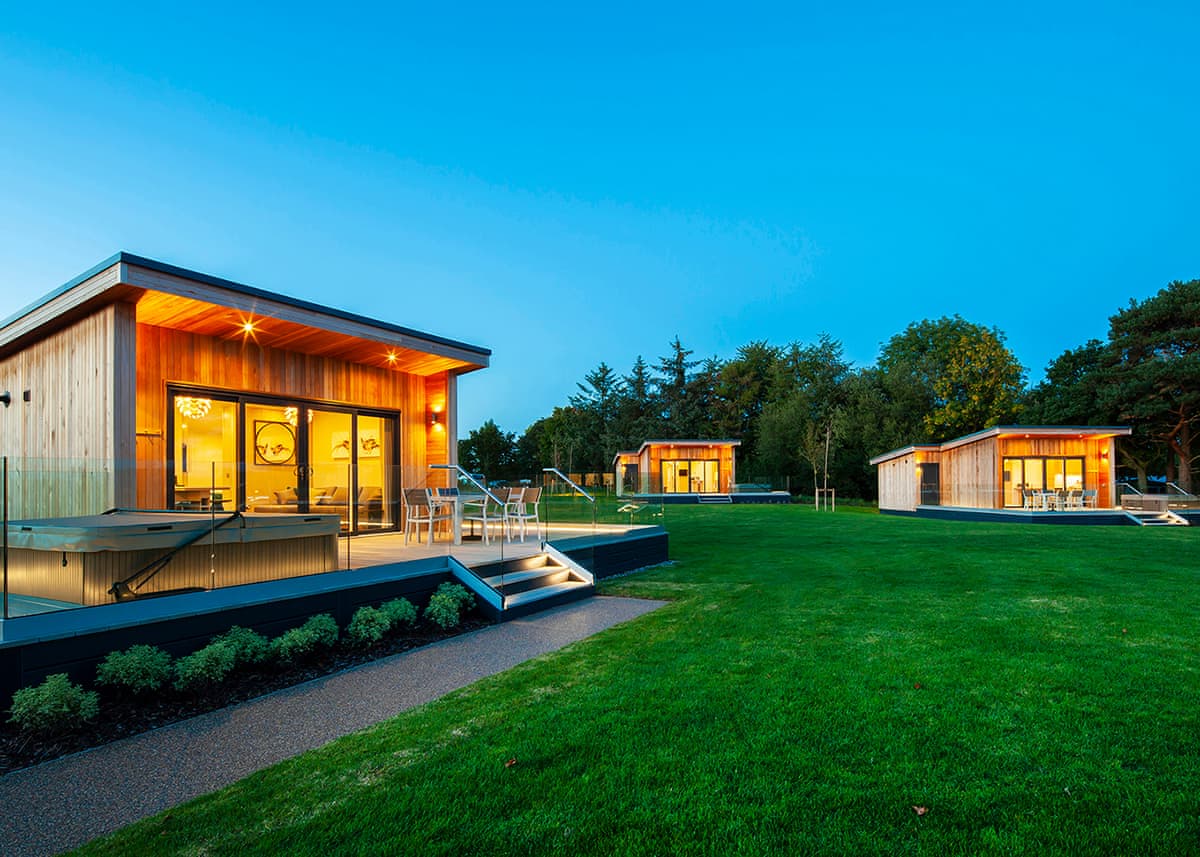
Plassey Holiday Park
✓ Set in 250 acres of park and woodland in the Dee Valley
Eyton, Wrexham, North Wales
£559 per break
Check availabilitySomewhere to steady the nerves


Wrexham: your questions answered
Is Wrexham in Wales or England? +
Wales. Wrexham lies in the north-east of the country, between the Welsh mountains and the lower Dee Valley, close to the border with Cheshire in England. It was historically in Denbighshire, became part of Clwyd in 1974, and has been the administrative centre of Wrexham County Borough since 1996.
Does Wrexham have any famous ghost stories? +
Not in the historical record we draw on here. Our source material covers Wrexham's archaeology, medieval development, Civil War experience and industrial history, but records no hauntings, apparitions or witness accounts — so we have not manufactured any.
What happened at the Beast Market? +
On 15 October 1584, St Richard Gwyn — a local recusant, schoolteacher and Welsh-language poet — was hanged, drawn and quartered there after being convicted of high treason for his Catholic beliefs. He was canonised by Pope Paul VI in 1970 as one of the Forty Martyrs of England and Wales.
What should I see in Wrexham? +
The fine Tudor church of St Giles above the historic city centre, the National Trust property of Erddig, the industrial heritage of the Clywedog Valley, and Wrexham A.F.C., one of the oldest professional football teams in the world.
Your experiences at Wrexham
Been on the tour, stayed the night, felt the cold spot for yourself? Tell the next visitor what happened — and if nothing did, that counts too.
No visitor stories yet — been to Wrexham? Yours would be the first.
Log in or create a free account to share your experience — accounts also save your trips and credit your photos.
More haunted places near Wrexham
Within 40 miles — enough for a haunted weekend tour.

🏛️ Stately home · Flintshire · 6.5 mi
Plas Teg
A Jacobean mansion rescued from ruin, said to house fifteen ghosts, a drowned bride-to-be and a well with a da...
3 ghosts

👻 Haunted place · Chester · 10.7 mi
Stanley Palace 🔦
A timber-framed Elizabethan town house on Watergate Street, built on friary ground, where the 7th Earl of Derb...
1 ghosts

🛏️ Hotel · Denbighshire · 13.9 mi
Ruthin Castle
A castle hotel with a drowning pit, a whipping pit and a Grey Lady who took an axe to her husband's mistress
3 ghosts Stay overnight

👻 Haunted place · Cheshire · 24.2 mi
Norton Priory 🔦
Four centuries of canons, floods and slow decline beneath the Cheshire trees — and a ruin where organised ghos...
1 ghosts

👻 Haunted place · Shropshire · 25.3 mi
Shrewsbury Prison 🔦
Behind the gates on Howard Street, a Victorian prison stands on the remains of a Georgian one — and visitors s...
1 ghosts

👻 Haunted place · Merseyside · 26.0 mi
Newsham Park Hospital 🔦
A grand Victorian orphanage on the edge of a Liverpool park, now derelict — and, the story goes, never quite e...
1 ghosts
Sources and further reading
- Wrexham — Wikipedia — Wikipedia
Researched by the BritStays Haunted Britain team; last updated 13 October 2026. Spotted something we've got wrong, or have your own story from Wrexham? We'd love to hear it.