

👻 Haunted place
Dover Castle
A Roman lighthouse, a Norman keep and a warren of cliff tunnels — the "Key to England" keeps as much history below ground as above it.
Photo: Wikipedia
Dover Castle stands where England runs out of land. Founded in the 11th century and described as the "Key to England" for its defensive significance, it is Grade I listed, a Scheduled Monument and — depending on which source you believe, since Windsor claims the title too — possibly the largest castle in the country. From the clifftop you are looking at the same stretch of water that every invader and every anxious sentry looked at before you.
What gives the place its weight is the sheer depth of occupation. There may have been earthworks here in the Iron Age or earlier, before the Romans came in AD 43; the unusual pattern of the banks doesn't sit quite comfortably with the medieval castle. Above it all stands a Roman lighthouse built in the early 2nd century — one of only three surviving from the Roman era anywhere in the world, the tallest and most complete standing Roman structure in England, and claimed by some to be Britain's oldest standing building.
Beneath your feet, meanwhile, run tunnels cut some fifteen metres into the chalk: barracks, then a base for the men who watched for smugglers, then an abandoned century of darkness, then an air-raid shelter, a hospital and the command centre from which the Dunkirk evacuation was directed.
🔦 You can join an organised ghost hunt here. Companies such as Haunted Happenings and Haunted Heritage run public overnight events at this venue — vigils, séances and all the kit in our sidebar.
Hauntings are told as reported — by owners, guests, guides and investigators — never as fact. The history underneath is often real, and sometimes tragic; we treat it with respect. Background from Wikipedia and the sources listed below.
The history behind the hauntings
After the Battle of Hastings in 1066, William the Conqueror took a roundabout route to his coronation via Romney, Dover and Canterbury. William of Poitiers records that Dover "had been reported impregnable"; while the inhabitants prepared to surrender unconditionally, Normans "greedy for money" set the castle alight and much of it was soon enveloped in flames. William paid for the repairs and spent eight days adding fortifications of his own. In 1088, eight knights were appointed under tenures to guard the castle — among them William d'Albrincis, Fulbert de Dover and Hugh Crevecoeur.
The castle took recognisable shape under Henry II, whose inner and outer baileys and great keep — the work of Maurice the Engineer — cost over £6,500 between 1179 and 1188, against an annual royal revenue of perhaps £10,000. In 1216, during the First Barons' War, the future Louis VIII of France besieged Dover twice, breached the walls, and still could not take it; the English defenders tunnelled outwards and attacked the French. The vulnerable north gate was afterwards converted into an underground forward-defence complex. In 1642 the castle changed hands without a shot: a local merchant, Richard Dawkes, and ten men scaled the cliffs, took the porter's lodge and the keys, and were inside before the garrison could be summoned.
The Napoleonic Wars brought William Twiss's great bastions and the barracks tunnels, first occupied by troops in 1803 and later used by the Coast Blockade Service against smuggling before being abandoned for more than a century. They were reopened in 1939 as an air-raid shelter, then a military command centre and underground hospital. In May 1940 Admiral Sir Bertram Ramsay directed Operation Dynamo — the evacuation of French and British soldiers from Dunkirk — from his headquarters in these cliff tunnels. His statue stands outside them today.
Sightings, investigations and published accounts
We'll be straight with you: for all its age and depth, Dover Castle comes to us with no ghost stories we can stand behind, and we would rather say so than invent them. The nearest thing to folklore in the record is a name — the scant remains of Dover's second Roman lighthouse, on the Western Heights across the town, are known as the Bredenstone or the Devil's Drop of Mortar, though no tale we can verify attaches to it. Event companies do run organised public ghost hunts at the castle, which is how most visitors come to spend a night in the tunnels. If you go, it is worth remembering that the wartime levels were a working command centre and hospital in a real war, and are best walked quietly.
Dover Castle in photos
Click any photo to enlarge
📷 Been here? Add your photo
Visiting Dover Castle
Dover Castle is in the care of English Heritage, which spent £2.45 million between 2007 and 2009 recreating the castle's interior; in 2019 some 368,243 people visited. Allow a full day. Inside the grounds you'll find the Royal chapel within the keep, dedicated to St Thomas Becket, and St Mary in Castro, a Saxon church rebuilt in the Victorian era, alongside the Roman lighthouse that was converted into its belfry around the year 1000. The Queen's & Princess of Wales's Royal Regiment Regimental Museum is also here. Of the tunnel levels — Annexe, Bastion, Casemate, Dumpy and Esplanade — only Annexe and Casemate are open to the public. Dumpy and its esplanade are closed, and Bastion is simply 'lost', though investigations continue to locate it and gain access.
Organised public ghost hunts are held at the castle by event companies: book ahead, and dress for chalk tunnels rather than a summer clifftop. If the castle looks oddly familiar before you arrive, it has stood in for a good deal of history on screen, from Wolf Hall and The Hollow Crown to The Other Boleyn Girl and Avengers: Age of Ultron.
Where to stay near Dover Castle
Nearest first — every distance measured from Dover Castle itself. Make a weekend of it.
0.3 miles away

0.3 miles away

0.3 miles away

0.5 miles away
0.6 miles away

1.2 miles away
2.4 miles away
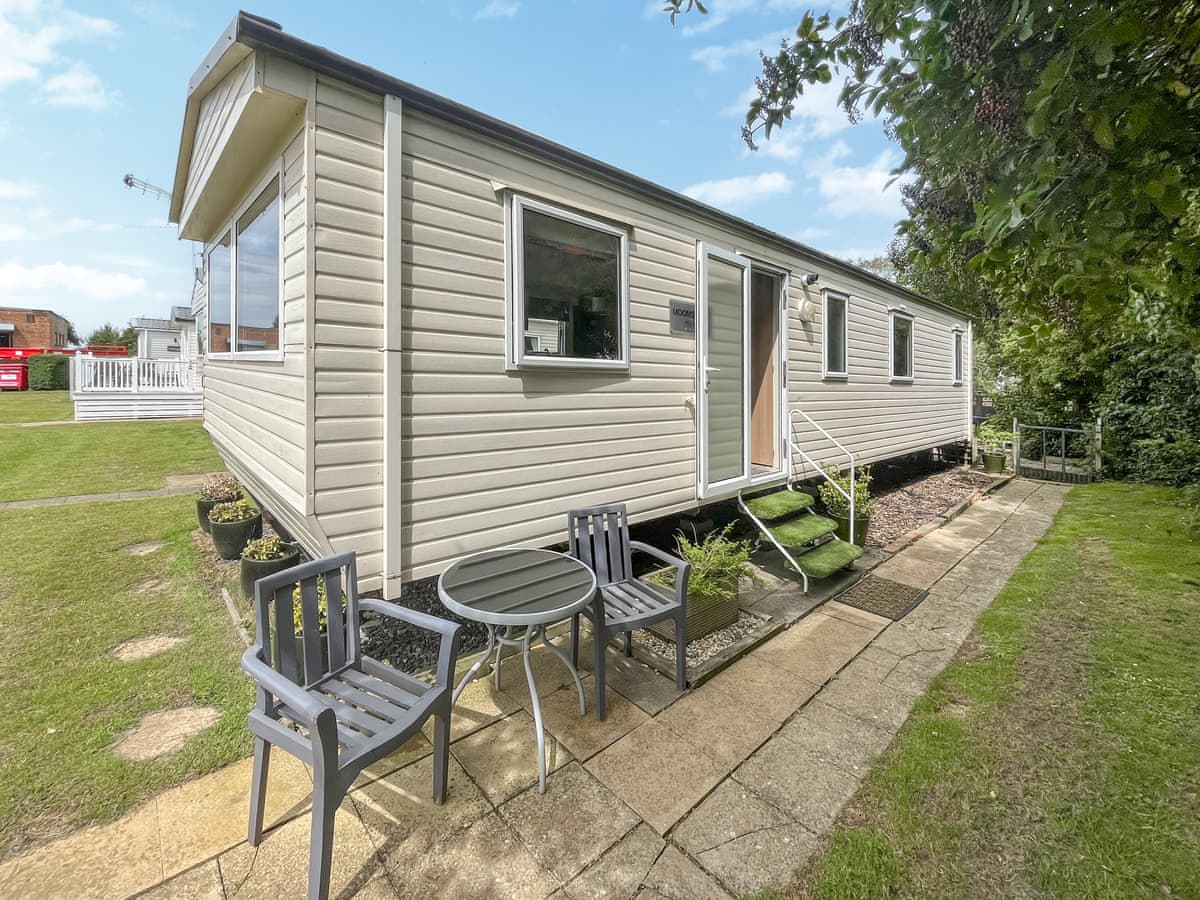
Home From Home
🏖️ 0.82 miles from St Margaret`s Bay (Excellent water quality)
Dover, Southern England
£621 per break
Check availability2.4 miles away

St Margarets Bay Holiday Park
✓ Short drive to the beach and White Cliffs of Dover
🏖️ 0.83 miles from St Margaret`s Bay (Excellent water quality)
Dover
2.4 miles away

Dover Castle: your questions answered
Why is Dover Castle called the "Key to England"? +
The name reflects its defensive significance throughout history. Dover has been a chief member of the Cinque Ports since their foundation in 1050, and the castle has been besieged, scaled and refortified repeatedly — from Louis VIII's two sieges in 1216 to a merchant's cliff-climbing raid in 1642. Some sources describe it as the largest castle in England, a title Windsor Castle also claims.
Is Dover Castle haunted? +
We have no ghost stories for Dover Castle that we can stand behind, and we would rather tell you that than make something up. Event companies do run organised public ghost hunts at the castle, so you can judge the atmosphere of the tunnels for yourself.
Is the Roman lighthouse really Britain's oldest standing building? +
It is claimed to be. Built in the early 2nd century, the five-level, eight-sided tower of tufa, Kentish ragstone and red brick is one of only three surviving Roman-era lighthouses in the world and the tallest, most complete standing Roman structure in England. It was converted into a belfry in the Saxon era around 1000, gained a new upper layer around 1430, and was partially renovated in 1913–1915.
What happened in the tunnels during the Second World War? +
They were converted first into an air-raid shelter, then into a military command centre and underground hospital. In May 1940 Admiral Sir Bertram Ramsay directed the Dunkirk evacuation, code-named Operation Dynamo, from his headquarters in the cliff tunnels. A military telephone exchange was installed in 1941, its switchboards in such constant use that a new tunnel had to be cut alongside to house the batteries and chargers.
Can you visit all of the tunnels? +
No. The Annexe and Casemate levels are open to the public. Dumpy — converted after the war to serve as a Regional Seat of Government in the event of an atomic war — is closed, as is its esplanade, last used as an air-raid shelter in the Second World War. The Bastion level is described as 'lost', though investigations continue to locate it.
Your experiences at Dover Castle
Been on the tour, stayed the night, felt the cold spot for yourself? Tell the next visitor what happened — and if nothing did, that counts too.
No visitor stories yet — been to Dover Castle? Yours would be the first.
Log in or create a free account to share your experience — accounts also save your trips and credit your photos.
More haunted places near Dover Castle
Within 40 miles — enough for a haunted weekend tour.

👻 Haunted place · Canterbury · 1.2 mi
Fort Amherst Citadel 🔦
A Napoleonic fortress cut deep into the Chatham chalk, where the story goes that a headless drummer boy's tapp...
1 ghosts

🏘️ Village · Kent · 24.6 mi
Pluckley
A pretty Wealden village with a Guinness-backed reputation, a dozen named ghosts and the Screaming Woods on it...
6 ghosts Ghost tours
🍺 Pub / inn · East Sussex · 28.4 mi
The Mermaid Inn, Rye
A 600-year-old smugglers' inn on a cobbled street, where duelling ghosts and a rocking chair keep guests awake
4 ghosts Ghost tours Stay overnight

👻 Haunted place · Kent · 38.9 mi
Chatham Historic Dockyard
Around four centuries of Royal Navy history live on in the Ropery, slipways and warships of what is claimed to...
1 ghosts

👻 Haunted place · Kent · 27.4 mi
Kent
Kent is a ceremonial county in South East England. It is bordered by Essex across the Thames Estuary to the no...
Sources and further reading
- Dover Castle — Wikipedia — Wikipedia
Researched by the BritStays Haunted Britain team; last updated 13 October 2026. Spotted something we've got wrong, or have your own story from Dover Castle? We'd love to hear it.