
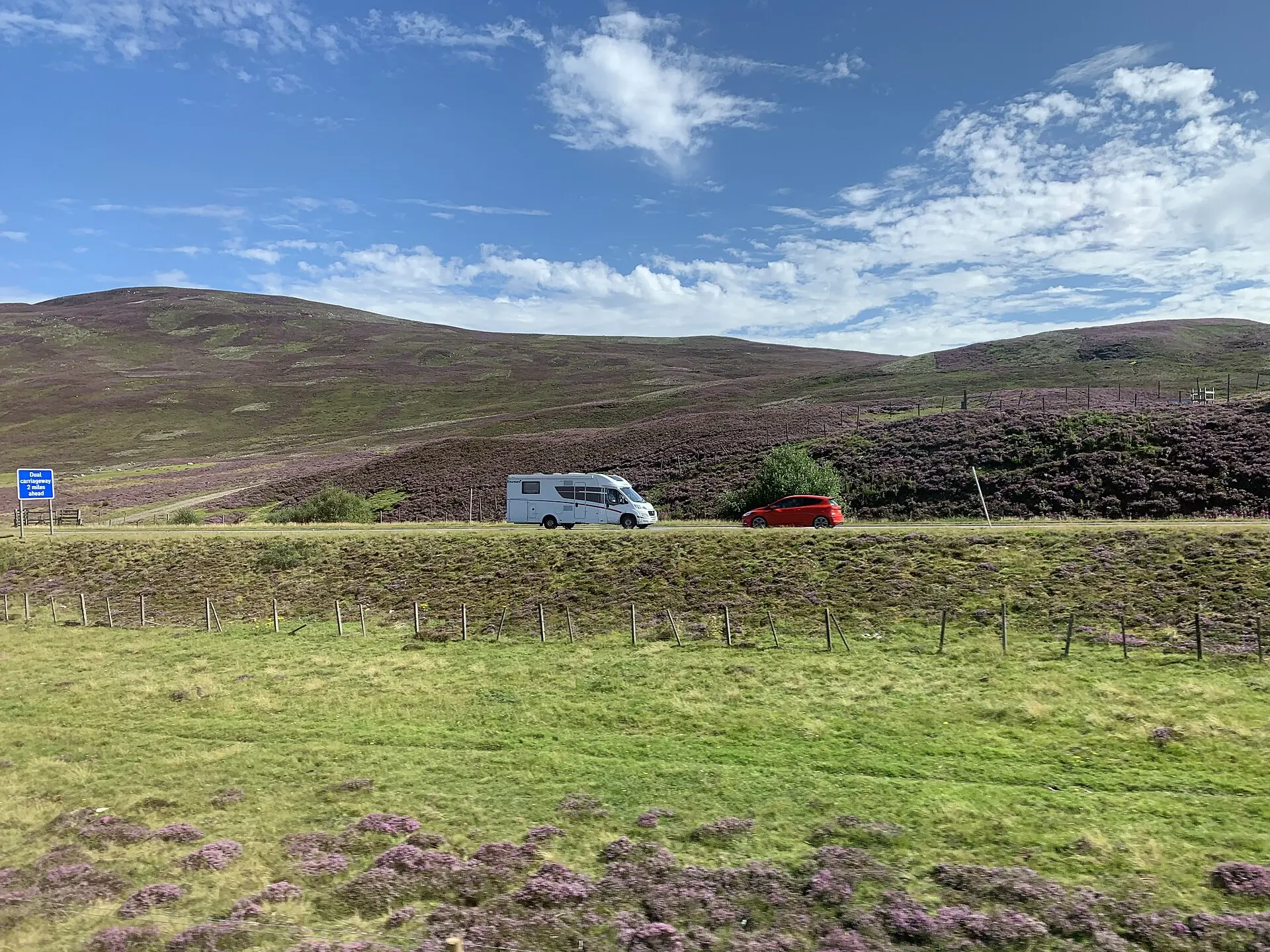
Photo: Andrew Abbott (CC BY-SA 2.0)
Towing & Motorhome Rules, In Plain English
Everything the law expects when you tow a caravan or drive a motorhome in the UK - licences, speed limits, weights and overnight rules - without the jargon. Ten minutes here saves an awkward conversation at a weighbridge.
We have not listed anything here yet
There are no towing & motorhome rules, in plain english on the site at the moment. We add places as operators list them, so this is worth another look later.
Your licence: what you can tow and drive
Since 16 December 2021, a standard category B car licence lets you tow a trailer or caravan up to 3,500kg MAM behind a car or van - the old B+E test requirement was scrapped, and the entitlement was added to licences automatically. For motorhomes, category B covers vehicles up to 3,500kg; heavier motorhomes (3,500kg to 7,500kg) need C1, which most drivers who passed their car test before 1 January 1997 already have. Check your own entitlements on your licence or at gov.uk before you book anything heavy.
Speed limits when towing
Towing a caravan or trailer in the UK: 30mph in built-up areas, 50mph on single carriageways, and 60mph on dual carriageways and motorways - ten below the usual limits, and it catches people out. Motorhomes under 3.05 tonnes unladen weight follow normal car limits; heavier ones follow the lower goods-vehicle limits. Towing vehicles and anything over 7.5 tonnes must stay out of the outside lane on motorways with three or more lanes.
The weight rules that keep you stable
The long-standing club advice is the 85% guideline: your caravan's fully-loaded weight (MTPLM) should ideally be no more than 85% of your car's kerbweight if you're new to towing - and never more than 100%. Get the noseweight right too (usually 5-7% of the caravan's actual weight, within your towbar's limit): too little is a recipe for snaking. Motorhome owners should know their payload - it's the difference between the plated maximum and the van as it left the factory, and it disappears fast once water, gas, bikes and passengers are aboard. A public weighbridge visit before the first big trip is an hour well spent.
Kit the law (and common sense) requires
Extension towing mirrors are required if your caravan is wider than what you can see in your standard mirrors - which is nearly every caravan. The caravan or trailer needs a number plate matching the towing car, working lights, and a breakaway cable or secondary coupling properly attached. Caravan tyres age faster than they wear: check the date codes, and most insurers and clubs advise replacement at five to seven years regardless of tread. If your car was registered after 1998, your towbar must be type-approved.
Motorhome height, width and bridges
Know your height in metres AND feet, write it on a note above the windscreen, and never trust a sat-nav that thinks you're a car. Railway bridges are hit thousands of times a year in the UK. Our campervan route planner plans around mapped low bridges and width limits for your exact dimensions - and shows fuel prices, water and waste points, and service stations with caravan parking along the way.
Overnight stops: the legal position
In England and Wales, sleeping overnight in a vehicle outside a campsite needs the landowner's permission - that includes most laybys and beach car parks, so look for pub stopovers, farm schemes and official aires. Scotland's access rights famously don't extend to motor vehicles, so the same rule of thumb applies: use designated spots. Our legal motorhome stopovers directory only lists places where overnighting is genuinely permitted, with community reports keeping it honest.
Before every trip: the five-minute walkround
Hitch secure and locked, breakaway cable on, jockey wheel up, lights and indicators working, corner steadies up, roof lights and aerial down, gas off, fridge on 12V, doors and lockers latched, mirrors set, tyre pressures checked cold. It reads like a lot; after three trips it takes five minutes and becomes the most valuable habit in caravanning.
Rules summarised for guidance - they change, and your licence, vehicle plate and the signs on the road are always the final word. Check gov.uk for the current law before you travel.