

🏰 Haunted castle · Ravenglass, Cumbria, England
Muncaster Castle
A Pennington family castle on the Cumbrian coast with a murderous jester, a haunted Tapestry Room you can sleep in and a boggle on the road
Photo: Wikipedia
Muncaster Castle has a fair claim to be the most haunted castle in the Lake District, and it is one of the few that lets you test the claim from inside the haunted room. The castle stands above the Esk estuary near Ravenglass on the western edge of Cumbria, home to the Pennington family for more than 800 years, and its Tapestry Room, with its dark hangings and iron fire-dogs shaped like devils' heads, has been the subject of a twenty-year scientific study as well as a great many sleepless nights.
The castle's ghosts are unusually well cast. There is Tom Fool, the sixteenth-century jester who gave the language the word tomfoolery and who, legend says, cut off a carpenter's head at his master's bidding. There is the child heard crying in the Tapestry Room and the woman heard singing to soothe it. And on the road outside there is Mary Bragg, the murdered housekeeper the locals call the Muncaster Boggle. This guide takes you through the real history of the Penningtons and the Luck of Muncaster, the reported hauntings, what guests, investigators and the castle's own family have described, and how to visit, stay in the grounds or book the overnight ghost sit in the Tapestry Room itself.
Hauntings are told as reported — by owners, guests, guides and investigators — never as fact. The history underneath is often real, and sometimes tragic; we treat it with respect. Background from Wikipedia and the sources listed below.
The history behind the hauntings
The Penningtons have documentary evidence of Muncaster as their home since 1208, when lands here were granted to Alan de Penitone, and family tradition pushes the connection back further still. A castle went up in the later thirteenth century and was enlarged in the fourteenth, when a pele tower was built on Roman foundations close to the fort of Glannaventa at Ravenglass. The house's most treasured possession dates from 1464: after his defeat at the Battle of Hexham, Henry VI was found wandering on Muncaster Fell and sheltered for nine days by Sir John Pennington. In gratitude the king gave the family his gilded glass drinking bowl, promising that as long as it remained unbroken the Penningtons would remain at Muncaster. The Luck of Muncaster is still here, and so are they.
Thomas Skelton, the family's fool, served here in the late sixteenth and early seventeenth centuries and died around 1600. His full-length portrait, holding his will, hangs at the end of a corridor and is one of the castle's most celebrated pictures; the word tomfoolery is said to derive from him. The legend that darkens his memory is told below. By the eighteenth century the castle had become a Georgian country house, and between 1862 and 1866 the fashionable architect Anthony Salvin remodelled it for the 4th Lord Muncaster, giving it the romantic silhouette of towers and battlements you see from the gardens today.
In the twentieth century the castle passed through the female line. Patrick and Phyllida Gordon-Duff-Pennington inherited it and, in the 1980s, moved in with their children, becoming the first family to live here full-time since 1917; Patrick's voice narrates the audio tour of the house. Their descendants run the castle, its 77 acres of gardens, the Hawk and Owl Centre and the accommodation, and they talk about the ghosts with the ease of people who have lived alongside them.
The ghosts of Muncaster Castle
4 reported apparitions, as the stories are told.
👻 Tom Fool (Thomas Skelton)
The corridors and the portrait at the end of the passage
Thomas Skelton was the Penningtons' jester around 1600, and by the castle's own account a man of dark humour. The legend says that Sir Ferdinand Pennington's daughter Helwise fell in love with a local carpenter, and that Tom, on his master's orders, beheaded the young man and boasted that he had "hid his head under a heap of shavings". Tom is also said to have amused himself by directing travellers he disliked towards the quicksands of the estuary. His portrait, painted with his will in hand, is said to unsettle visitors, and staff report footsteps and the sound of someone laughing in the corridors where he once worked. The castle treats him as both mascot and menace.
👻 The child of the Tapestry Room
The Tapestry Room, towards the window
The Tapestry Room is the castle's most haunted space and the one people pay to sleep in. Guests describe a child crying towards the window end of the room, sometimes joined by a woman singing softly as if comforting a sick infant, followed by footsteps and the rustle of skirts when nobody is there. Some report a dark, three-dimensional figure gliding towards the bed before vanishing. Family tradition links the crying to Margaret Pennington, a daughter of the house who was often ill and died young, though the castle is careful to present this as a possible rather than a certain identification.
👻 Mary Bragg, the White Lady (the Muncaster Boggle)
The road below the castle and the grounds
Mary Bragg was a housekeeper in Ravenglass in the early 1800s who fell in love with a footman at the castle. As the story goes, two men called at her door one night saying her lover was ill and needed her, led her along the road and murdered her, leaving her body to be found in the river. Locals afterwards spoke of a woman in white on the road below the castle, and drivers still report a pale figure at the roadside or in the woods at night. The Muncaster Boggle, as she is known in Cumbrian dialect, is the ghost you are most likely to hear about in the pubs of Ravenglass.
👻 The King's Room and Henry VI
The King's Room
The room where Henry VI is said to have slept during his nine days of refuge in 1464 has its own quieter reputation. Visitors on the ghost tours describe a sense of being watched and an unexplained drop in temperature, and the castle's guides tell of the deposed king pacing there in the small hours. There is no named sighting to pin it to, and the family are the first to say the atmosphere may owe more to the Luck of Muncaster in its case downstairs and the weight of the story than to anything otherworldly.
Sightings, investigations and published accounts
What makes Muncaster unusual among haunted castles is that it has been studied as well as visited. Dr Jason Braithwaite, a cognitive psychologist and neuroscientist at the University of Birmingham, has spent around two decades investigating the castle, and the Tapestry Room in particular. He has reported unusual and anomalous magnetic fields in the areas where hauntings are claimed, and his working theory is that such fields may affect the brains of susceptible people, particularly those prone to migraine or epilepsy, producing the sense of presence, the sounds and the figures that guests describe. It is a sceptical explanation offered with a straight face, and the castle happily promotes it alongside the ghost stories.
The guest reports themselves are consistent. Those who have slept in the Tapestry Room describe a child crying near the window, a woman singing, footsteps, the rustle of bed hangings and a shadow that moves across the room with depth and shape. Ghost-hunt groups who hire the castle add the usual bangs, cold spots and words on their recorders, and several report seeing a figure in the corridor near Tom Fool's portrait. Countryfile, exploring whether Muncaster is Britain's most haunted castle, found the family matter-of-fact about all of it: the Penningtons have lived with these stories for generations and tell them without either evangelism or embarrassment.
The road ghost has a longer paper trail. Reports of a white figure on the lane below the castle go back to the nineteenth century, and Mary Bragg's murder is remembered locally as a real event even though the details, like the names of her killers, are lost. Television has come and gone over the years, but the castle has never leaned on it; its reputation rests on the people who have paid to spend a night in the Tapestry Room and come down to breakfast with a story.
Muncaster Castle in photos
📷 Been here? Add your photo
Visiting Muncaster Castle
Muncaster Castle stands a mile from the village of Ravenglass on the west Cumbrian coast, reached by the A595 or by the Cumbrian Coast railway to Ravenglass, where the miniature Ravenglass and Eskdale Railway also starts. The castle, gardens and Hawk and Owl Centre are open daily through the main season from around Easter to early November, with the gardens and owl centre also open at weekends in winter; check the castle's website for current times and for the days the house itself is open. Allow a full day: there is the audio tour of the state rooms, the Tapestry Room and Tom Fool's portrait, 77 acres of gardens famous for rhododendrons and views up Eskdale, daily bird displays, a cafe and a play area. The house has stairs and no lift, and the gardens are hilly, though the main paths are firm. Parking is on site.
You can stay in the grounds. The Coachman's Quarters offers bed-and-breakfast rooms in the old stable yard, and the estate also has self-catering cottages and, in summer, glamping bell tents. For the ghosts, book the castle's Ghost Sit: a private evening tour followed by a night in the Tapestry Room for up to eight people, with a full English breakfast in Creeping Kate's Kitchen for those who make it to morning. Ravenglass has pubs with rooms and Eskdale has inns and campsites a few miles inland.
🛏️ Brave enough to sleep at Muncaster Castle?
B&B rooms in the Coachman's Quarters, cottages and summer bell tents in the grounds; overnight Ghost Sits in the Tapestry Room for up to eight.
Where to stay near Muncaster Castle
Nearest first — every distance measured from Muncaster Castle itself. Make a weekend of it in Ravenglass.
1.0 miles away

1.2 miles away

1.2 miles away

1.9 miles away
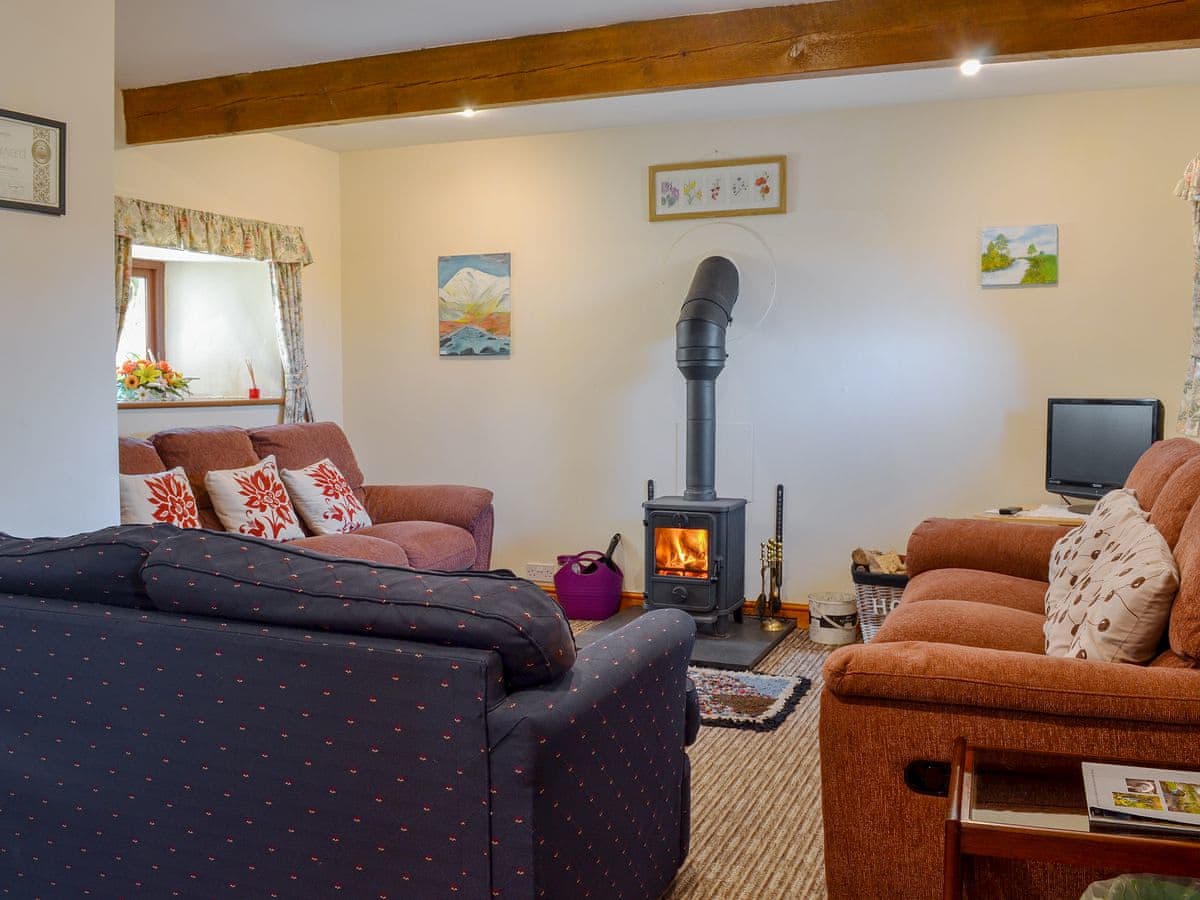
2.4 miles away

2.7 miles away

Lutwidge Arms Hotel
✓ Full Cumbrian breakfast included with a range of cooked and lighter options
🏖️ 2.87 miles from Seascale (Good water quality)
Holmrook
2.7 miles away

2.9 miles away
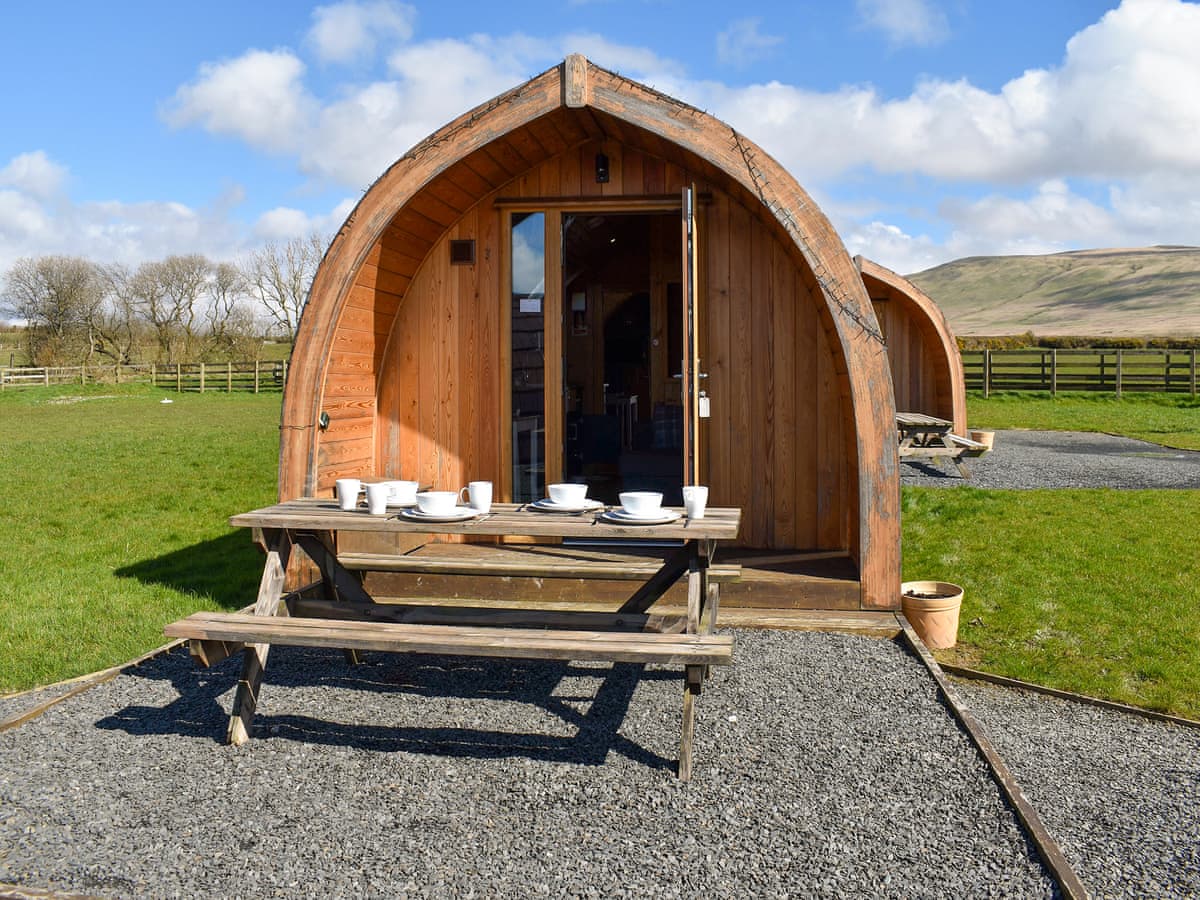
Moorside Glamping Pods - Barn Scar
Ulpha and the Duddon Valley, North West England
£313 per break
Check availability2.9 miles away
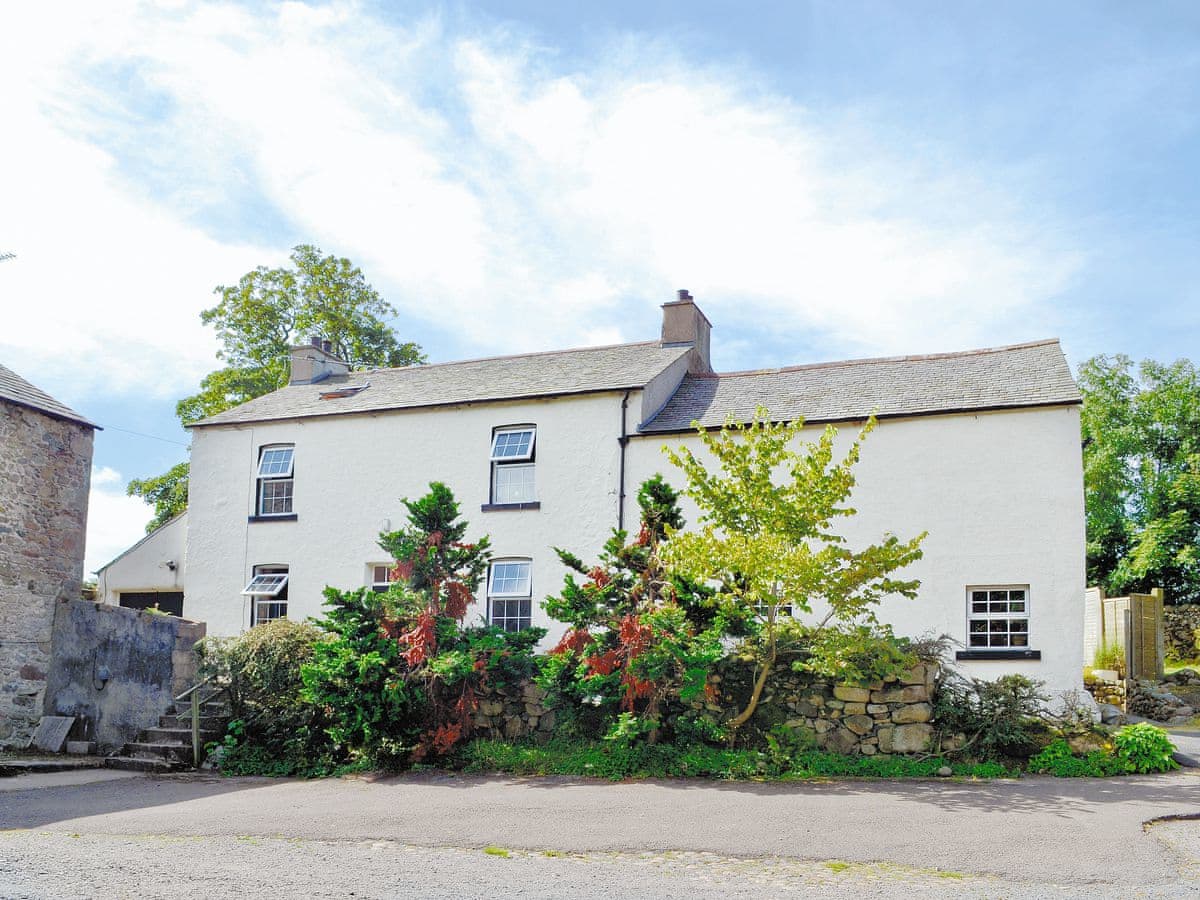
Foldgate
Ulpha and the Duddon Valley, North West England
£631 per break
Check availabilityMuncaster Castle: your questions answered
Is Muncaster Castle haunted? +
Muncaster Castle is often called the most haunted castle in Cumbria. Its Tapestry Room is reported to echo with a crying child, a singing woman and footsteps; the jester Tom Fool is said to walk the corridors; and Mary Bragg, the murdered housekeeper, is reported as a white figure on the road below the castle.
Who was Tom Fool of Muncaster? +
Thomas Skelton was the Pennington family's jester, who died around 1600 and is said to have given English the word tomfoolery. Legend says he beheaded a carpenter who had fallen in love with the daughter of the house, on his master's orders. His portrait hangs in the castle and his ghost is reported nearby.
Can you stay overnight at Muncaster Castle? +
Yes. The Coachman's Quarters in the stable yard offers B&B rooms, and there are self-catering cottages and summer bell tents in the grounds. For the full experience, the castle runs Ghost Sits in which up to eight people spend the night in the haunted Tapestry Room after a private tour.
What is the Tapestry Room at Muncaster Castle? +
The Tapestry Room is a bedroom hung with dark tapestries and warmed by a fire with devil-headed fire-dogs, said to be the most haunted room in the castle. Guests report a child crying by the window, a woman singing, rustling skirts and a dark figure. It has been studied for two decades by psychologist Dr Jason Braithwaite.
Where is Muncaster Castle? +
Muncaster Castle is a mile from Ravenglass on the west coast of Cumbria, on the A595 between Whitehaven and Millom, and about an hour and a half from the M6 by road. Ravenglass station on the Cumbrian Coast line is a mile away, and the village has pubs with rooms.
Your experiences at Muncaster Castle
Been on the tour, stayed the night, felt the cold spot for yourself? Tell the next visitor what happened — and if nothing did, that counts too.
No visitor stories yet — been to Muncaster Castle? Yours would be the first.
Log in or create a free account to share your experience — accounts also save your trips and credit your photos.
More haunted places near Ravenglass
Within 40 miles — enough for a haunted weekend tour.

Sources and further reading
- The Ghosts of Muncaster Castle, Cumbria — Haunted Rooms
- Ghosts of Muncaster Castle — Great Castles
- Castle Tour and Tapestry Room Ghost Sit at Muncaster Castle — Muncaster Castle (official site)
- Ghosts, grief and grandeur in Cumbria: Is Muncaster Castle Britain's most haunted castle? — Countryfile
- Haunted in your head — The National
- Muncaster Castle, Gardens, Hawk & Owl Centre — Historic Houses
- Stay With Us — Muncaster Castle (official site)
Researched by the BritStays Haunted Britain team; last updated 13 September 2026. Spotted something we've got wrong, or have your own story from Muncaster Castle? We'd love to hear it.