

👻 Haunted place
Kinneil House
A Hamilton seat west of Bo'ness, where painted chambers, a burnt palace and a desperate night-time escape have left far more history than hauntings.
Photo: Wikipedia
Stand on the green at Kinneil, with the park spreading out around you, and it is hard to believe this place was once pencilled in for demolition. It was saved in 1936, and saved by paint: 16th-century mural paintings were discovered here, and the wreckers were called off. The house is now in the care of Historic Environment Scotland and protected as a Category A listed building.
What survives is a layered thing rather than a single building. A symmetrical mansion of 1677 sits on the remains of an earlier tower house of the 16th or 15th century, with two rows of gunloops for early cannon still visible in the masonry. Beside it stands the smaller mid-16th-century east wing, and it is here that the two painted rooms wait — the reason Kinneil still stands at all.
Visitors arriving in hope of a ghost story should know in advance: the records gathered here are rich in warfare, confinement and sudden flight, but they are notably quiet on hauntings. We would rather tell you that plainly than furnish you with a spectre.
Hauntings are told as reported — by owners, guests, guides and investigators — never as fact. The history underneath is often real, and sometimes tragic; we treat it with respect. Background from Wikipedia and the sources listed below.
The history behind the hauntings
The lands of Kinneil came to Walter Fitz Gilbert, ancestor of the Hamiltons, from Robert the Bruce in 1323, and Kinneil became the family's principal seat in the east of Scotland. A charter of 1474 names the castle of "Kynneil called Craig Lyown", alongside saltpans and land to be reclaimed from the sea. There was a deer park here early on — in November 1503 James IV sent a man to fetch deer nets from Kinneil to Falkland Palace, and the king came in July 1508 to look over Lord Hamilton's horses. James Hamilton, 1st Earl of Arran, died at Kinneil in 1529, though he wished to be buried at Hamilton. Just west of the house, across a narrow ravine, stands the roofless ruin of the former parish church, its west gable still upright.
The great builder was James Hamilton, 2nd Earl of Arran, Governor of Scotland after the death of James V. Timber came by boat from Leith in 1549 and 1550 for roofing, floors and panelling; the garden was improved for the spring of 1553 with hedges, marjoram and lettuce, and trees brought from Fife and Strathearn. In September 1553 Arran handed 44 shillings to the masons laying foundation stones for another part of the palace. His painted rooms survive: the vaulted Arbour Room, its decoration evoking verdure tapestry with vignettes of Samson and Delilah, Abraham and Isaac, David and Bathsheba and the Temptation of St Anthony; and a second chamber with the Good Samaritan, Lucretia, Saint Jerome and Mary Magdalene. The painter's name seems to be unrecorded.
Violence came repeatedly. The house stood empty on 4 February 1560 when French troops under d'Oysel attacked and burnt it. In May 1570 Regent Lennox damaged it with gunpowder and spoiled the lands after the assassination of Regent Moray at Linlithgow. Later it served as a place of confinement as much as comfort: the Earl of Gowrie was brought here in April 1584, stayed five days, and was taken on to Stirling for trial and beheading. James VI nonetheless banqueted here on 11 November 1583 and held court at Christmas-time in 1588, playing at cards with Roger Aston. The Arbour Room was redecorated around 1620, almost certainly by Valentine Jenkin, and the main house was rebuilt in 1677 by William Douglas, 3rd Duke of Hamilton.
The ghosts of Kinneil House
1 reported apparition, as the stories are told.
👻 The Night Flight of the Earl of Arran
A high window of the old house, and the road to Falkland Palace
Kinneil's best-known night-time drama is a matter of record rather than legend, and it is worth saying so plainly. In 1562 James Hepburn, Earl of Bothwell, came to Kinneil to make his peace with James Hamilton, 3rd Earl of Arran. It was said that Bothwell proposed they kidnap Mary, Queen of Scots, imprison her in Dumbarton Castle, and kill her half-brother Lord James Stewart and her secretary William Maitland of Lethington.
A few days later, on Easter Day, Arran — who suffered from mental ill health — left his anxious father's keeping by knotting sheets at a high window and climbing down; the drop is given as thirty fathoms. He made his way to Falkland Palace to tell the queen of the plot. A chronicle records it starkly: "And upon the xxix of Merche 1562, my lord of Arrane came furth of the palice of Kynneill, on ane fransy in the nycht, at ane heich wyndo, and past to the quenis grace at Falkland". Some, like William Douglas of Lochleven, believed he acted out of friendship for Lord James. No ghost has been reported at that window; what the records preserve is a young man in genuine distress, and the story deserves to be told as such.
Kinneil House in photos
Click any photo to enlarge
📷 Been here? Add your photo
Visiting Kinneil House
Kinneil House stands to the west of Bo'ness in east-central Scotland, in the care of Historic Environment Scotland, and sits within a public park. Access to the interior, including the two painted rooms of the mid-16th-century east wing, is in Historic Environment Scotland's hands, so it is worth checking arrangements before you travel rather than assuming the doors will be open. Outside, look for the two rows of gunloops for early cannon in the older fabric, and the 1677 facade with its pair of stone staircases at the ends.
The park rewards an unhurried wander. It incorporates a section of the Roman Antonine Wall and the only example of an Antonine fortlet with visible remains. A short walk west, across a narrow ravine, brings you to the roofless parish church with its surviving west gable. One of its bells, apparently 15th-century, is preserved in the nearby Kinneil Museum, carrying an incomplete Lombardic inscription — "EN : KATARINA : VOCOR : VT : PER : ME : VIRGINIS ALME", or "Lo, Katherine I am called, that by me of the Blessed Virgin ..." — thought to have continued on a second, lost bell. A large stone cross from the same church is kept with the palace, and carved stones, including the armorial with the Hamilton motto "Through!" and Margaret Douglas's "Lock Sickar", are displayed in a cellar.
Where to stay near Kinneil House
Nearest first — every distance measured from Kinneil House itself. Make a weekend of it.
0.8 miles away
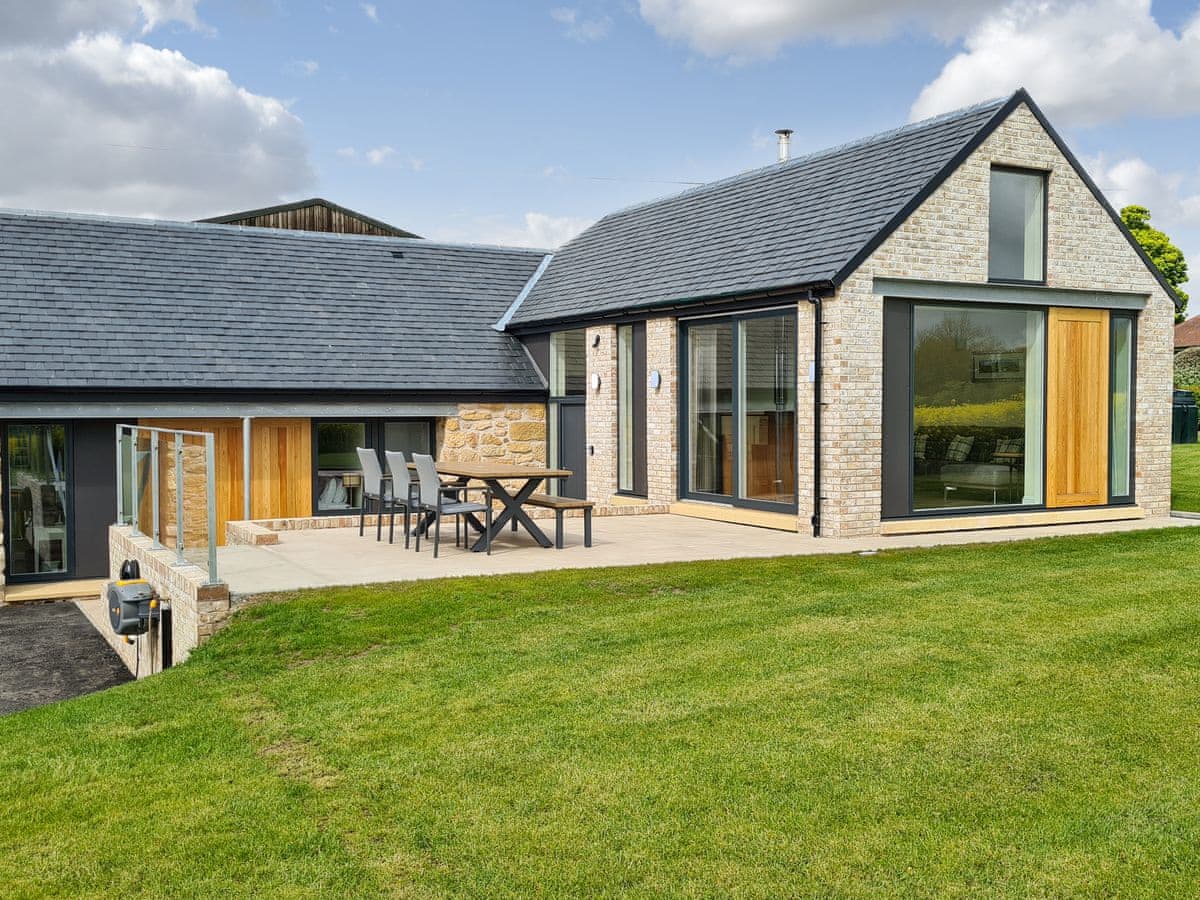
0.8 miles away

Hideaway Lodges
Birkhill, Linlithgow, Edinburgh, Southern Scotland
£319 per break
Check availability0.9 miles away

1.7 miles away
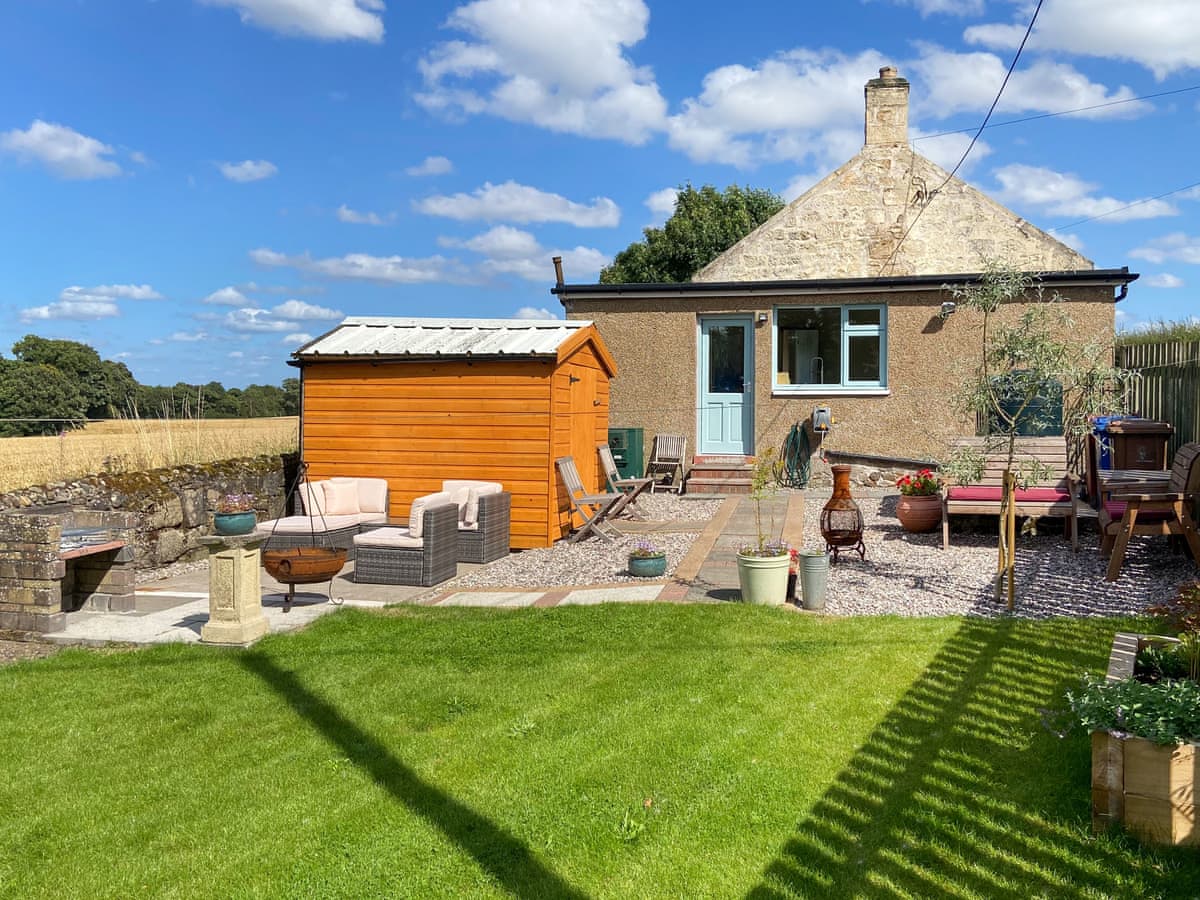
Inveravon Cottage
✓ Cosy lounge with an open fire for unwinding
Glasgow, Southern Scotland
£707 per break
Check availability1.9 miles away
2.1 miles away

2.3 miles away

2.4 miles away
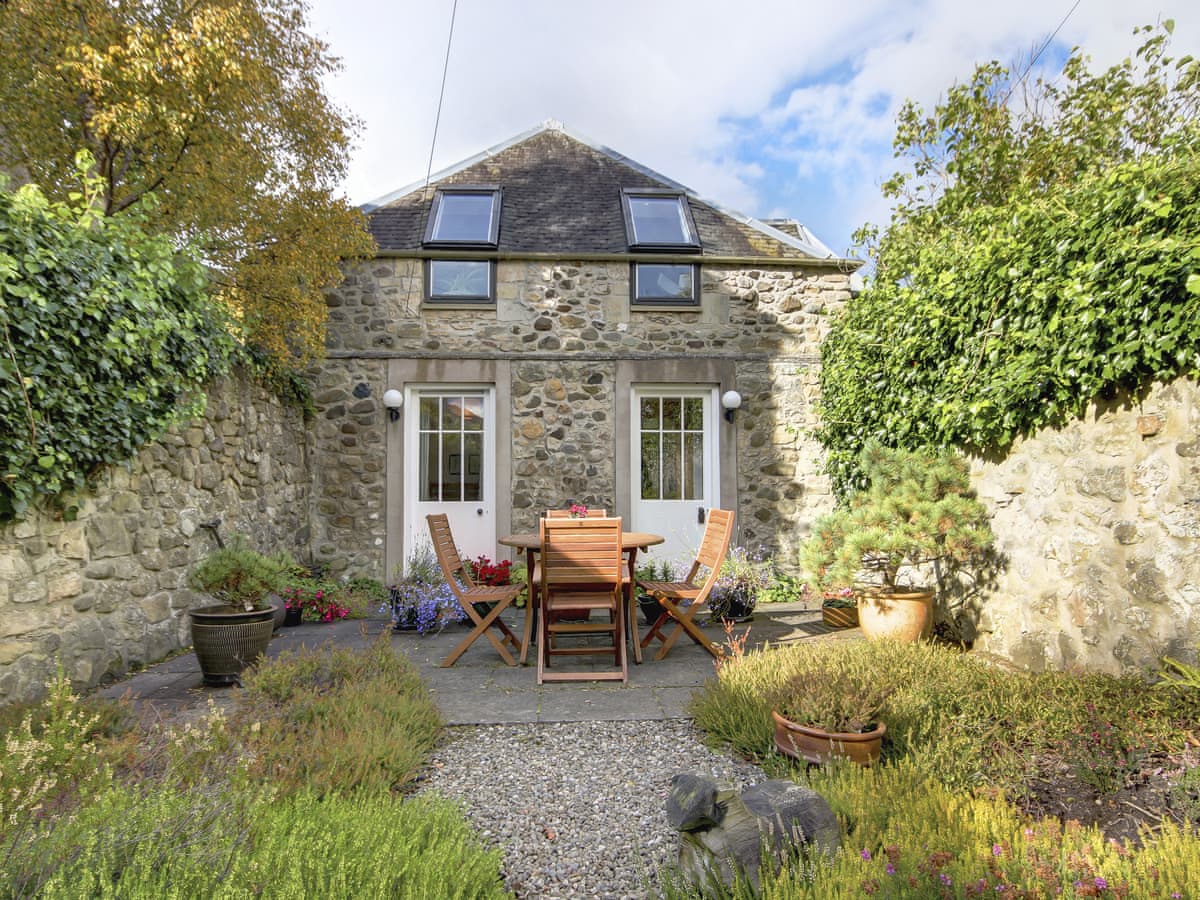
2.4 miles away
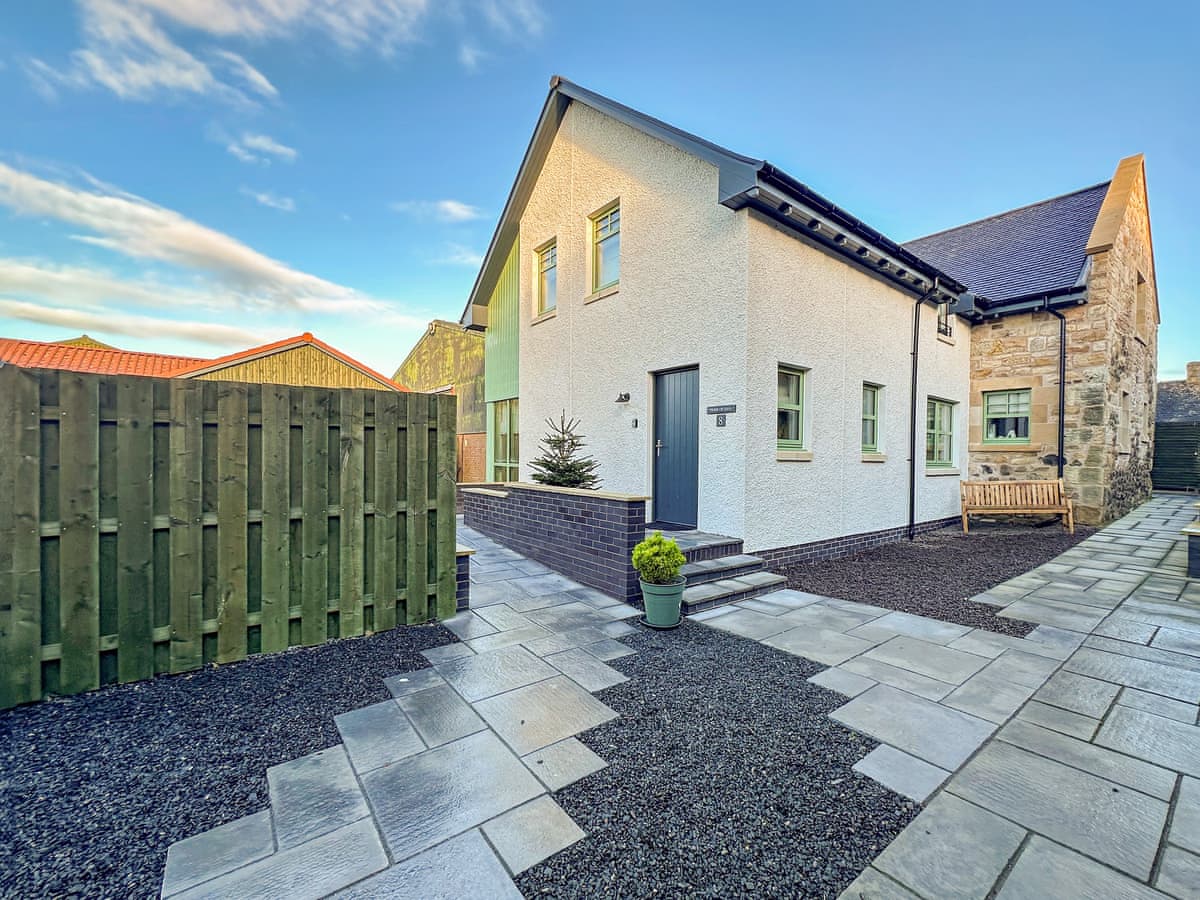
Paddockhall Cottages - Pride of Erin
Edinburgh, Southern Scotland
£821 per break
Check availabilityKinneil House: your questions answered
Is Kinneil House actually haunted? +
The historical record we draw on here contains no ghost sightings or reported hauntings at Kinneil. What it does hold is a great deal of real drama — the burning of the house in 1560, its damage by gunpowder in 1570, and the 3rd Earl of Arran's descent from a high window in 1562. We would rather report that honestly than invent spectres.
Why was Kinneil House saved from demolition? +
The house was saved in 1936 when 16th-century mural paintings were discovered. Those painted rooms, in the smaller mid-16th-century east wing, remain the heart of the site, and the house is now protected as a Category A listed building.
Did James VI ever stay at Kinneil? +
Yes. He stayed in May 1582 to receive the envoy Signor Paul, though some sources say Paul was received at Dalkeith Palace instead. He came to banquet with the Earl of Arran on 11 November 1583, and held court at Kinneil again at Christmas-time in 1588 as the guest of John Hamilton, Commendator of Arbroath, playing cards with his English courtier Roger Aston.
What Roman remains are in Kinneil Park? +
The public park incorporates a section of the Antonine Wall and the only example of an Antonine fortlet with visible remains.
Your experiences at Kinneil House
Been on the tour, stayed the night, felt the cold spot for yourself? Tell the next visitor what happened — and if nothing did, that counts too.
No visitor stories yet — been to Kinneil House? Yours would be the first.
Log in or create a free account to share your experience — accounts also save your trips and credit your photos.
More haunted places near Kinneil House
Within 40 miles — enough for a haunted weekend tour.

🏰 Castle · Edinburgh · 17.2 mi
Edinburgh Castle
A fortress on a volcanic rock with a phantom piper beneath it, a headless drummer on the ramparts and a scienc...
5 ghosts

⛪ Abbey, church or graveyard · Edinburgh · 17.6 mi
Greyfriars Kirkyard
The graveyard of Greyfriars Bobby, the Covenanters' Prison and a poltergeist accused of hundreds of physical a...
4 ghosts Ghost tours

🏚️ House · Edinburgh · 17.6 mi
Mary King's Close
A 17th-century street buried beneath the Royal Mile, a room of dolls for a girl called Annie, and a plague myt...
4 ghosts Ghost tours

👻 Haunted place · Edinburgh · 17.7 mi
Edinburgh Vaults
Beneath Edinburgh's South Bridge lie some 120 forgotten chambers — once workshops, taverns and slum homes, and...
3 ghosts

🛏️ Hotel · Midlothian · 23.6 mi
Dalhousie Castle
A 13th-century Ramsay stronghold turned castle hotel, where a Grey Lady taps on bedroom doors and dinner is se...
4 ghosts Ghost tours Stay overnight

👻 Haunted place · Fife · 24.0 mi
Balgonie Castle
On the south bank of the Leven, a 14th-century keep stands restored among roofless ranges — and, so the story...
2 ghosts
Sources and further reading
- Kinneil House — Wikipedia — Wikipedia
Researched by the BritStays Haunted Britain team; last updated 13 October 2026. Spotted something we've got wrong, or have your own story from Kinneil House? We'd love to hear it.