

🏰 Haunted castle · Forfar, Angus, Scotland
Glamis Castle
The Queen Mother's childhood home, a bricked-up card game with the Devil and the secret that every heir is said to be told
Photo: Wikipedia
Glamis Castle is often called the most haunted castle in Scotland, and it wears the title with the easy confidence of a house that has had 650 years to collect its stories. Rising in pink-grey sandstone out of the flat farmland of Angus, about five miles south-west of Forfar, it has been the seat of the Lyon family (later Bowes-Lyon) since 1372. It was the childhood home of Queen Elizabeth The Queen Mother, the birthplace of Princess Margaret, and, if you believe Shakespeare, the setting for Macbeth.
It is also, reportedly, home to a bricked-up room where a drunken earl is still gambling with the Devil, a chapel seat that is kept empty for a woman burned as a witch in 1537, and a family secret so terrible that one earl said you would thank God it was not yours. That last one, the so-called Monster of Glamis, has been argued over since the Victorian era and shows no sign of going away.
This guide separates the documented history from the legends, walks through the ghosts room by room, looks at who has claimed to see what, and covers how to visit Glamis Castle and where to stay nearby in Angus.
Hauntings are told as reported — by owners, guests, guides and investigators — never as fact. The history underneath is often real, and sometimes tragic; we treat it with respect. Background from Wikipedia and the sources listed below.
The history behind the hauntings
Glamis was a royal hunting lodge before King Robert II granted the Thanage of Glamis to Sir John Lyon in 1372, and the castle the visitor sees today was built up from the 1400s by his descendants, the Lords Glamis and later the Earls of Strathmore and Kinghorne. It has never left the family. The historical King Macbeth, who died in 1057, had no connection with the place, but that has not stopped Shakespeare's "Thane of Glamis" from attaching himself to the castle's reputation.
The darkest chapter in the real history belongs to Janet Douglas, Lady Glamis, widow of John, the 6th Lord. Caught up in James V's hatred of the Douglas family, she was accused of witchcraft and of conspiring to poison the king. On the evidence of witnesses later said to have been coerced, she was convicted and burned at the stake on Castle Hill in Edinburgh in 1537. The chapel ghost known as the Grey Lady is said to be her.
The later Lyons were prolific builders and hosts. Mary, Queen of Scots stayed here, the castle was remodelled in the 17th century, and in the 20th it became a royal home. Lady Elizabeth Bowes-Lyon, daughter of the 14th Earl, grew up at Glamis and went on to marry the future George VI; their second daughter, Princess Margaret, was born in the castle on 21 August 1930. It was also into this well-documented family that, on 21 October 1821, the eldest son of the 11th Earl was born and, according to the records, died the same day. From that entry in the register grew the legend of the Monster of Glamis.
The ghosts of Glamis Castle
5 reported apparitions, as the stories are told.
👻 The Monster of Glamis
A secret room somewhere in the thick walls; the battlements and grounds
The most famous story at Glamis is not really a ghost at all. Rumours that began circulating in the late 19th century claimed that the heir born in 1821 had not died at birth but had been born so severely deformed that he was hidden away in a secret chamber and lived to a great age, glimpsed occasionally on the battlements or in the grounds. The secret, it was said, was known only to the Earl and his factor, and passed to each heir when he came of age. Claude Bowes-Lyon, the 13th Earl, is reported to have said: "If you could even guess the nature of this castle's secret, you would get down on your knees and thank God it was not yours." Historians point out that the registers record a child who died the day he was born, and that the tale was probably embroidered by Victorian society gossip. The castle itself is happy to let you make up your own mind.
👻 Earl Beardie
A bricked-up chamber in the old tower
Alexander Lindsay, 4th Earl of Crawford, was a heavy drinker and gambler known as Earl Beardie. The legend says he was playing cards at Glamis late on a Saturday night when his companion refused to continue into the Sabbath. Beardie swore he would play on "if it is with the Devil himself", and at midnight a stranger duly knocked at the door and sat down at the table. By morning the earl had reportedly lost his soul. Accounts differ over who else sat at that table, but they agree on the aftermath: for years the sound of cursing, stamping feet and rattling dice was said to echo from the room until, in desperation, it was bricked up. Beardie is still reportedly heard behind closed doors, and some guests have claimed to wake to find a bearded figure in armour leaning over their bed.
👻 The Grey Lady (Janet Douglas, Lady Glamis)
The chapel
The gentlest of the Glamis ghosts is also the one with the most solid history behind her. Janet Douglas was burned at the stake in Edinburgh in 1537 on charges that were almost certainly false, and her figure is said to have been seen ever since kneeling in prayer at the altar of the castle's small chapel, dressed in grey. The family has traditionally kept one seat in the chapel for her, and no one else sits in it. The Queen Mother's sister, Lady Granville, reportedly believed firmly in the castle's ghosts and said she had seen the Grey Lady in the chapel as a girl. Visitors on the guided tour still ask the guides which seat is hers.
👻 The Tongueless Woman
The grounds, and a barred window in the castle
A more unsettling figure is the woman reportedly seen wandering the grounds at night, pointing to a badly wounded face with blood spilling from her mouth. The legend attached to her is that she was a serving maid who stumbled on the family secret and threatened to reveal it, whereupon the earl had her tongue cut out and had her killed. She has also been claimed at a barred window high in the castle, staring out. There is no historical record of such a woman, and the tale is usually told as a companion piece to the Monster legend, but it remains one of the stories most often repeated by locals in Glamis village.
👻 The White Lady and the page boy
The avenue of trees and the Queen's Room
Two quieter apparitions round out the Glamis cast. A White Lady is said to drift along the tree-lined avenue that leads up to the castle, seen mostly at dusk and never identified. Inside, a small servant boy is reportedly seen sitting on the stone seat beside the door of the Queen's Room, as though he has been told to wait there and forgotten. Staff and guests over the years have described tripping over "something" at that spot when the seat appeared to be empty. Neither figure has a name or a date attached, which, for a castle with this many stories, is almost refreshing.
Sightings, investigations and published accounts
Glamis has been talked about as a haunted house since at least the mid-19th century, and the best-known account concerns the secret room rather than a ghost. The diplomat Sir Horace Rumbold wrote of a house party in the 1850s at which the Countess of Strathmore and her guests, with the earl away, went round the castle opening every window and hanging out "a sheet, or towel, or pocket handkerchief" so that they could count them from outside. With "innumerable white signals fluttering in the summer breeze", they reportedly found one window with nothing in it, and could not account for the room behind it. Lord Strathmore returned unexpectedly and, in Rumbold's telling, was furious. Guests have reportedly been counting the windows ever since.
The royal family's own connection has added to the lore. The Queen Mother grew up here and was said to have had her own encounters, and her sister Lady Granville reportedly spoke openly of seeing the Grey Lady in the chapel. Later visitors and staff have claimed the usual repertoire of a big old house: doors that open on their own, footsteps in empty corridors, a sudden chill in the chapel, and the sound of Earl Beardie's dice from behind the wall.
The sceptical view is fairly put by the Scottish press, which has revisited the "200-year-old mystery" of the Monster more than once: the 1821 child is recorded as dying the day he was born, no secret room has ever been found, and the stories swelled in the Victorian era when Glamis was a fashionable country-house destination full of guests with time to talk. The castle neither confirms nor denies any of it, which is exactly the right answer.
Glamis Castle in photos
Click any photo to enlarge
📷 Been here? Add your photo
Visiting Glamis Castle
Glamis Castle is a working family home and one of Scotland's great visitor houses, about five miles south-west of Forfar in Angus, a mile north of Glamis village off the A94. The castle is open daily from spring to the end of October and is seen by guided tour only; tours last around 50 minutes and take in the crypt, the chapel where the Grey Lady is said to kneel, the drawing room and the royal apartments. Check the castle's website for current dates and times before you travel. The grounds and gardens stay open on selected days into December, and there are pinetum and walled-garden walks, the Castle Kitchen restaurant, the Old Larder for something quicker and a well-stocked gift shop.
The castle does not run ghost hunts or overnight vigils, and there is no accommodation in the castle itself, but Glamis village, Forfar and Kirriemuir are all close, with Dundee about 12 miles south. Expect stairs and uneven stone floors on the tour; parking is on site and free.
Where to stay near Glamis Castle
Nearest first — every distance measured from Glamis Castle itself. Make a weekend of it in Forfar.
0.8 miles away

1.7 miles away

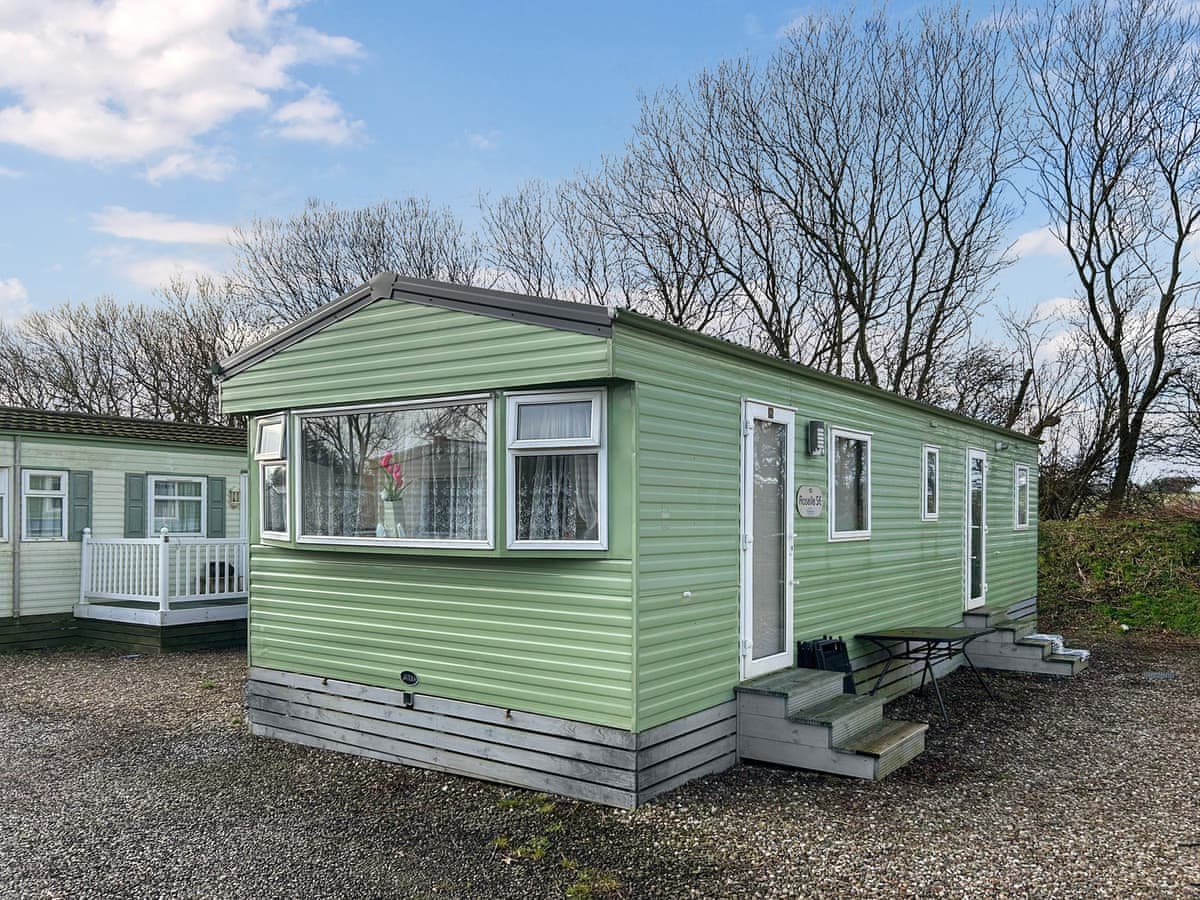
Drumshademuir Caravan & Camping Park
✓ Two styles of holiday homes available for hire all year round
Forfar
2.4 miles away

2.7 miles away

3.4 miles away

3.7 miles away

3.7 miles away

3.8 miles away

3.8 miles away
Glamis Castle: your questions answered
Is Glamis Castle really haunted? +
Glamis Castle is reportedly one of the most haunted castles in Scotland. Ghosts said to be seen there include the Grey Lady in the chapel, Earl Beardie in a bricked-up room, a tongueless woman in the grounds and a White Lady on the avenue. None has been proven, but the stories go back to the 19th century.
What is the Monster of Glamis? +
The Monster of Glamis is a legend that a badly deformed heir born in 1821 was hidden in a secret room and lived for decades, the secret passed to each earl on coming of age. Records show the child died the day he was born, and no secret room has ever been found.
Who was Earl Beardie? +
Earl Beardie was Alexander Lindsay, 4th Earl of Crawford, a hard-drinking gambler who, legend says, insisted on playing cards into the Sabbath and lost his soul to the Devil at Glamis. The room where they played was reportedly bricked up, and his cursing and dice are still said to be heard.
Can you visit Glamis Castle? +
Yes. Glamis Castle is open daily from spring to the end of October, with guided tours of the castle included in the admission ticket, plus gardens, grounds, a restaurant and a gift shop. Check the official website for current opening dates and times before visiting.
Can you stay overnight at Glamis Castle? +
No, Glamis Castle is a private family home and does not offer overnight accommodation or ghost vigils. Visitors usually stay in Glamis village, Forfar or Kirriemuir, or in Dundee about 12 miles away, all of which have hotels, inns and self-catering cottages.
Where is Glamis Castle? +
Glamis Castle is in Angus, eastern Scotland, about five miles south-west of Forfar and a mile north of Glamis village, just off the A94. Dundee is roughly 12 miles to the south and Perth about 30 miles to the west.
Your experiences at Glamis Castle
Been on the tour, stayed the night, felt the cold spot for yourself? Tell the next visitor what happened — and if nothing did, that counts too.
No visitor stories yet — been to Glamis Castle? Yours would be the first.
Log in or create a free account to share your experience — accounts also save your trips and credit your photos.
More haunted places near Forfar
Within 40 miles — enough for a haunted weekend tour.

👻 Haunted place · Fife · 29.8 mi
Balgonie Castle
On the south bank of the Leven, a 14th-century keep stands restored among roofless ranges — and, so the story...
2 ghosts

👻 Haunted place · St Andrews · 7.1 mi
Cortachy Castle
Cortachy Castle is a castellated mansion House at Cortachy, Angus, Scotland, some four miles north of Kirriemu...
👻 Haunted place · Fife · 12.9 mi
HM Prison Castle Huntly
Castle Huntly is a castle in Scotland, now used as a prison under the name HMP Castle Huntly. It is located ap...

👻 Haunted place · St Andrews · 18.7 mi
Ethie Castle
Ethie Castle is a 14th-century castle covering 15,091 square feet (1,402.0 m2). It is located approximately 3...

👻 Haunted place · Aberdeenshire · 21.8 mi
Montrose Air Station Museum
The Montrose Air Station Museum is located to the north of Montrose, Angus, Scotland. Montrose has the distinc...
👻 Haunted place · Aberdeenshire · 22.2 mi
RAF Montrose
Royal Air Force Montrose or more simply RAF Montrose is a former Royal Air Force station in Forfarshire in Sco...
Sources and further reading
- Glamis Castle Ghosts: 10 Terrifying Facts — Spooky Isles
- The Monster of Glamis — Smithsonian Magazine
- Halloween in Scotland: The 200-year-old mystery of the Monster of Glamis Castle in Angus — The Scotsman
- From the human toad to the tongueless woman, Glamis Castle hides some dark secrets — The Courier
- Royal Ghost Stories: Glamis Castle — Royal Central
- About Glamis Castle: 1000 years of history in the heart of Angus — Glamis Castle
- Glamis Castle opening times and dates — Glamis Castle
Researched by the BritStays Haunted Britain team; last updated 13 September 2026. Spotted something we've got wrong, or have your own story from Glamis Castle? We'd love to hear it.