

🏰 Haunted castle · Turriff, Aberdeenshire, Scotland
Fyvie Castle
Five towers, five families, a Green Lady who carved her name into a window ledge and a curse laid by Thomas the Rhymer
Photo: Wikipedia
Fyvie Castle is often called the most haunted castle in the north-east of Scotland, and it has the paperwork to prove it: a woman's name cut into a stone window ledge, a stone that weeps in a glass case, and a curse from a 13th-century prophet that the families who owned it took seriously for 600 years. It stands in parkland near the village of Fyvie, eight miles south of Turriff in Aberdeenshire, a great Scottish baronial pile whose five towers each carry the name of one of the families that built them.
The ghost is the Green Lady, said to be Lilias Drummond, first wife of the laird Alexander Seton, who died in 1601 and who, the story goes, returned on the night her husband remarried to carve her name outside the bridal chamber. She is joined by a phantom trumpeter from one of Scotland's saddest ballads, a little girl, a cigar-smoking figure and a sealed room that is supposed to blind anyone who opens it.
Now cared for by the National Trust for Scotland, Fyvie is one of the best haunted castles in Scotland to actually visit, with guided tours that take in the window ledge, the weeping stone and the Charter Room. This guide covers its history, its ghosts, what has been reported, and where to stay nearby in Aberdeenshire.
Hauntings are told as reported — by owners, guests, guides and investigators — never as fact. The history underneath is often real, and sometimes tragic; we treat it with respect. Background from Wikipedia and the sources listed below.
The history behind the hauntings
Fyvie began as a royal stronghold and stopped being one in 1390, when Robert III granted it to Sir Henry Preston after the Battle of Otterburn. Preston built the oldest of the five towers, dated to between 1390 and 1433, and the castle then passed through four more families, the Meldrums, the Setons, the Gordons and the Leiths, each of whom added a tower of their own. The result is one of the finest examples of Scottish baronial architecture, with a grand entrance tower raised by Alexander Seton in 1599.
Seton is the key figure in the castle's ghost lore. Laird of Fyvie from 1596 to 1622 and later 1st Earl of Dunfermline, he was a great builder and one of the most powerful men in Scotland. His first wife, Lilias Drummond, died in 1601 after bearing him daughters but no son; he remarried quickly, and the legend of the Green Lady grew from that second wedding night. Whether Lilias died of natural causes, of a broken heart or, as the darker version has it, of starvation in a locked room at her husband's hands, is exactly the sort of question the castle leaves open.
The Gordons, who followed the Setons, are attached to the castle's other great legend, the curse of the weeping stones. Their line at Fyvie ended with Cosmo Gordon in 1879, who is said to have seen the Green Lady before he died. The Leith family bought the castle in 1889 and filled it with the art collection that still hangs there. In 1984 Fyvie was bought by the National Trust for Scotland with support from the National Heritage Memorial Fund, and has been open to the public ever since.
The ghosts of Fyvie Castle
5 reported apparitions, as the stories are told.
👻 The Green Lady (Lilias Drummond)
The Drummond bedroom, the window ledge and the corridors
The story runs that Alexander Seton married his second wife soon after Lilias Drummond's death in 1601 and that the couple spent their wedding night in the Drummond bedroom. In the night they heard scratching at the window. In the morning Seton opened it and found, cut deep into the solid stone of the outer ledge, upside down as if written from outside, the words D LILLIAS DRUMMOND. The carving is still there, and the guided tour stops to show it. Ever since, a woman in a green dress has reportedly been seen drifting along the castle's corridors and stairs, and her appearance is taken as an omen of a death in the family. The tour also visits the lonely room where, in the harsher telling, Lilias was starved to death.
👻 The phantom trumpeter (Andrew Lammie)
The Preston Tower and the approaches to the castle
The old ballad of Mill o' Tifty's Annie tells of Agnes Smith, daughter of the miller at Tifty, who fell in love with Andrew Lammie, trumpeter to the laird of Fyvie. Her family forbade the match, and Agnes is said to have died of a broken heart in 1678; Lammie, on learning of her death, reportedly died of grief himself, having sworn that his trumpet would sound over Fyvie at the death of every laird. His ghost is said to haunt the castle, and a statue of a trumpeter on top of the Preston Tower is traditionally held to represent him. Visitors have claimed to hear a trumpet call on the wind with no player in sight.
👻 The weeping stones and the curse of Thomas the Rhymer
The Charter Room
The curse is older than any ghost. Thomas the Rhymer, the 13th-century seer, is said to have been refused shelter at Fyvie on a stormy night and to have cursed the castle: no male heir would ever inherit it until three stones taken from a sacred burial ground and used in its walls were returned. One stone was built into the castle, one is displayed in a bowl inside a glass case in the Charter Room, where it is said to stay wet when everything around it is dry, and the third was lost in the River Ythan, which makes the curse impossible to lift. Whether or not you believe in prophecy, the families of Fyvie did lose eldest sons with grim regularity over six centuries.
👻 The sealed chamber
Beneath the Charter Room
Under the Charter Room is a chamber that has been sealed for generations, and the tradition is that anyone who opens it will lose their sight, and their wife with them. Two lairds are said to have ignored the warning: both died soon afterwards, the wife of one went blind and the wife of the other suffered with her eyes for the rest of her life. The room has stayed shut ever since. It is the kind of story every old castle has a version of, but at Fyvie it sits alongside a stone that weeps and a name carved in a window, and it seems less far-fetched than it should.
👻 Annie and the cigar smoker
The corridors and bedrooms
Two smaller ghosts complete the roll. A little girl called Annie is reportedly seen and heard in the castle, and a figure smelling of cigar smoke is said to flit along the halls, unseen but for the smell he leaves behind. Neither has a firm identity, though the cigar has been linked in the retelling to the Victorian and Edwardian gentlemen of the Leith era, when the castle was a place of house parties and shooting weekends. Staff who locked down in the castle during the pandemic have spoken about its atmosphere to the local press with a mixture of affection and unease.
Sightings, investigations and published accounts
The Green Lady's reputation rests first on the carving, which is physical, visible and very old, and second on a long run of family tradition. The most specific report concerns Cosmo Gordon, the last of the Gordon lairds, who is said to have seen the Green Lady in his room shortly before his death in 1879 and to have taken her as an omen. His younger brother reportedly saw the same apparition a few days later and bent the knee to her as a gesture of respect. On a grey December morning, the story goes, Cosmo died. The Green Lady has been treated as a portent of death in the family ever since.
Since the National Trust for Scotland took over in 1984 the reports have come from staff and visitors rather than lairds: a figure in green at the end of a corridor, footsteps on the stairs, the smell of cigar smoke in rooms where nobody has smoked for a century, and the weeping stone in the Charter Room damp on a dry day. The Press and Journal, Aberdeen's daily paper, has revisited the castle's ghosts, weeping stones and secret chambers more than once, including an account from staff who spent lockdown living in what it called "the north-east's most haunted castle".
The sceptical reading is straightforward. A stone that sweats in a cool room is doing what porous stone does; a wet window ledge carving can be read as a memorial cut by masons rather than a ghost; and a family that lost eldest sons over 600 years was doing no worse than most. But the guides tell the stories with a straight face, the carving is there to be touched, and Fyvie is a castle that rewards an open mind.
Fyvie Castle in photos
Click any photo to enlarge
📷 Been here? Add your photo
Visiting Fyvie Castle
Fyvie Castle is a National Trust for Scotland property in the village of Fyvie, about eight miles south of Turriff and 25 miles north-west of Aberdeen, in the rolling farmland of Aberdeenshire. The castle interior is seen by guided tour only, which is the best way to do it: the guides take you to the Drummond bedroom and the window ledge, the Charter Room with its weeping stone and the great wheel stair, with plenty of time for the ghosts. The castle, shop and tearoom are open from late March to the end of October, and tours run on set days and times, so check the Trust's website before travelling; the grounds, walled garden, loch and lakeside walks are open all year.
The tour involves a good many stairs and there is no lift, though there is disabled parking beside the castle and the tearoom and the grounds are mostly level. There is no accommodation at the castle and no ghost hunts, but Turriff, Oldmeldrum and Inverurie have inns and B&Bs, and Aberdeen is an easy 40-minute drive for a wider choice of hotels.
Where to stay near Fyvie Castle
Nearest first — every distance measured from Fyvie Castle itself. Make a weekend of it in Turriff.
1.8 miles away

2.2 miles away
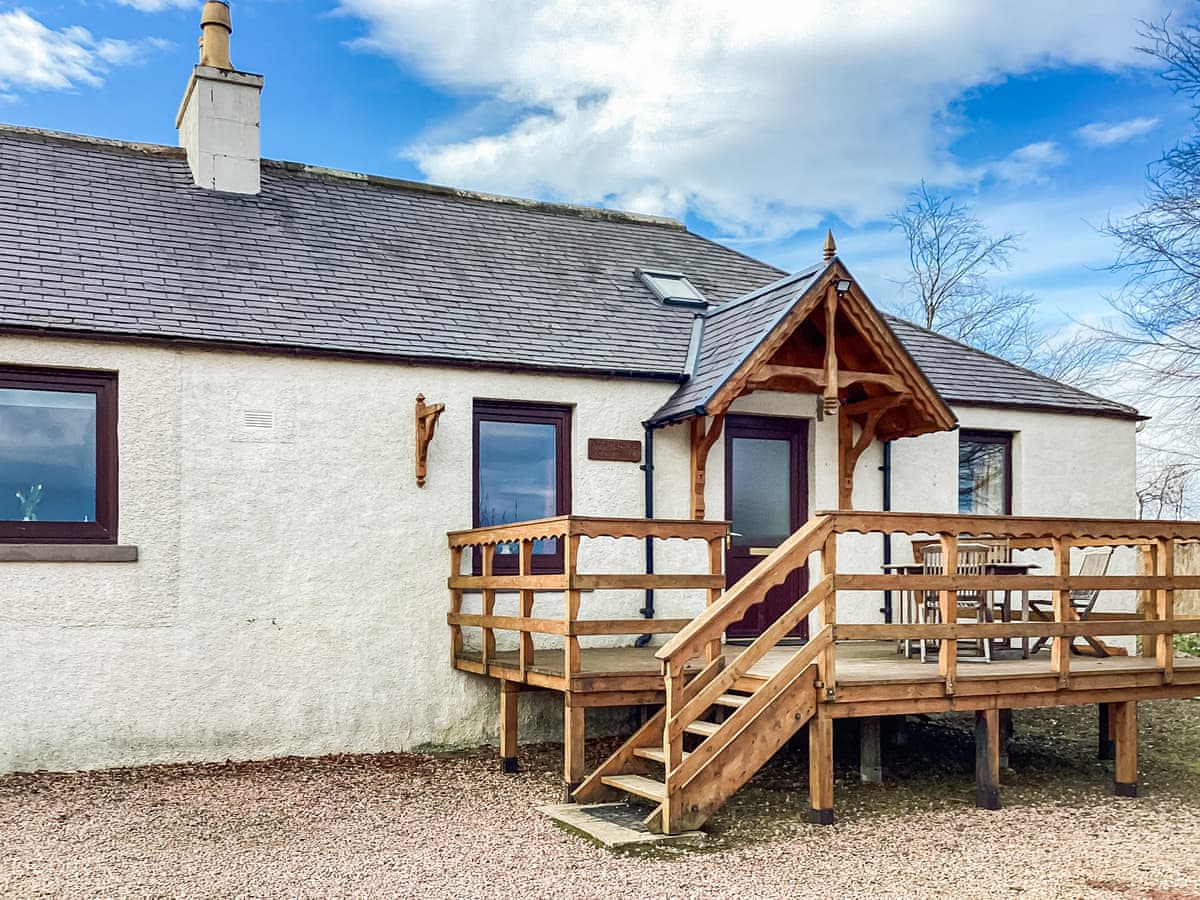
Seggat Farm Holiday Cottages - Gardeners Cottage
Huntly, Northern Scotland
£487 per break
Check availability2.2 miles away
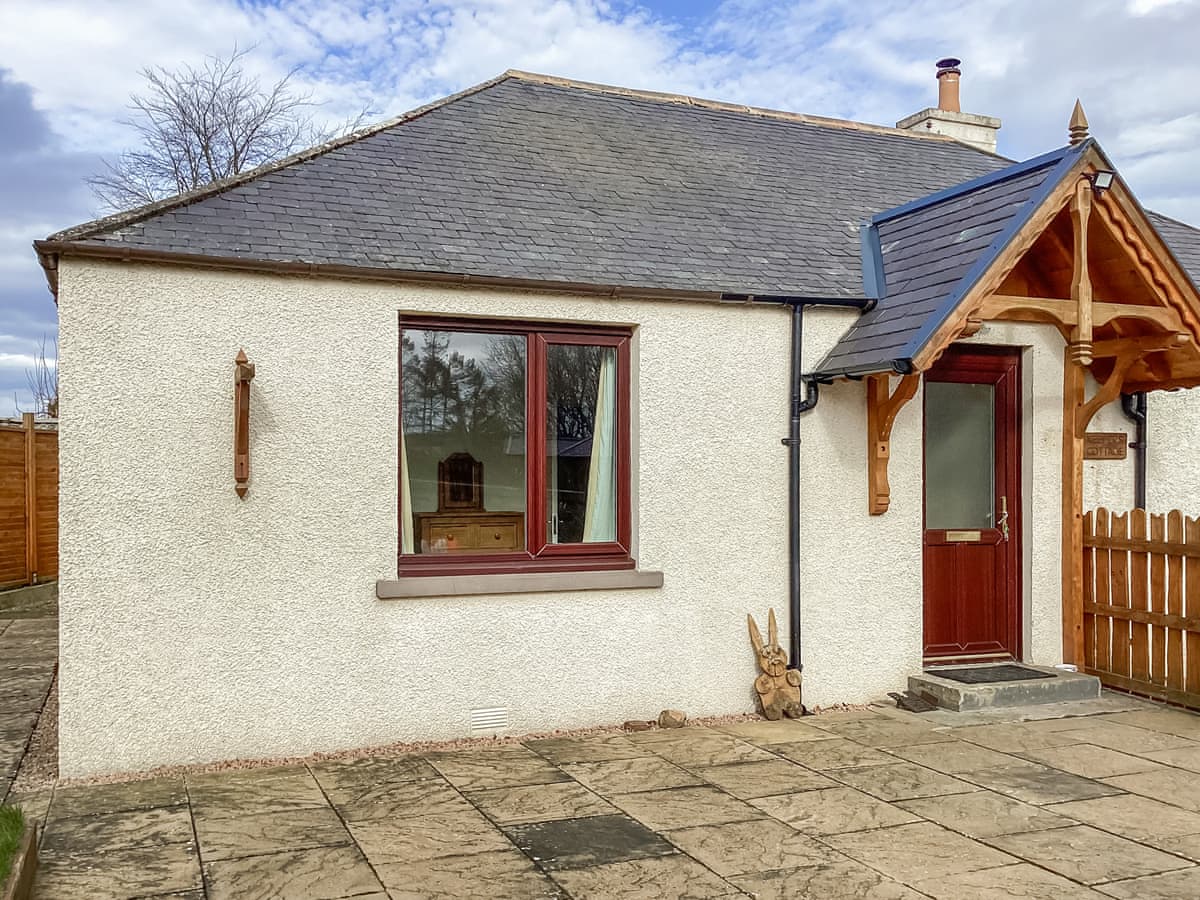
Seggat Farm Holiday Cottages - Keepers Cottage
Huntly, Northern Scotland
£543 per break
Check availability5.9 miles away

6.3 miles away

6.6 miles away

6.9 miles away

6.9 miles away

7.0 miles away

Fyvie Castle: your questions answered
Is Fyvie Castle haunted? +
Fyvie Castle is reportedly one of the most haunted castles in Scotland. Its best-known ghost is the Green Lady, said to be Lilias Drummond, who died in 1601 and whose name is carved into a window ledge. A phantom trumpeter, a girl called Annie and a cigar-smoking figure are also reported.
Who is the Green Lady of Fyvie Castle? +
The Green Lady is said to be Lilias Drummond, first wife of Alexander Seton, laird of Fyvie. When Seton remarried soon after her death in 1601, the couple reportedly heard scratching on their wedding night and found her name cut into the window ledge. Her appearance is taken as an omen of a death in the family.
What are the weeping stones of Fyvie Castle? +
The weeping stones are three stones said to have been taken from a sacred burial ground and cursed by Thomas the Rhymer so that no male heir would inherit Fyvie until they were returned. One is displayed in the Charter Room and reportedly stays wet when everything around it is dry; another was lost in the River Ythan.
Can you visit Fyvie Castle? +
Yes. Fyvie Castle is owned by the National Trust for Scotland, and the interior is open by guided tour from late March to the end of October on set days; the grounds, garden and loch are open all year. Check the Trust's website for tour days and times before you travel.
Can you stay overnight at Fyvie Castle? +
No, Fyvie Castle has no visitor accommodation and does not run overnight ghost hunts. The nearest places to stay are in Fyvie village, Turriff and Oldmeldrum, with more hotels in Inverurie and Aberdeen, about 40 minutes away by car.
Where is Fyvie Castle? +
Fyvie Castle is in the village of Fyvie in Aberdeenshire, north-east Scotland, about eight miles south of Turriff on the A947 and roughly 25 miles north-west of Aberdeen. There is a car park at the castle with disabled spaces beside the castle and the tearoom.
Your experiences at Fyvie Castle
Been on the tour, stayed the night, felt the cold spot for yourself? Tell the next visitor what happened — and if nothing did, that counts too.
No visitor stories yet — been to Fyvie Castle? Yours would be the first.
Log in or create a free account to share your experience — accounts also save your trips and credit your photos.
More haunted places near Turriff
Within 40 miles — enough for a haunted weekend tour.

👻 Haunted place · Aberdeenshire · 22.8 mi
Kinnaird Head
Where a 16th-century castle became Scotland's first Commissioners-lit lighthouse — and a small tower nearby th...
1 ghosts

👻 Haunted place · Aberdeenshire · 15.0 mi
Leith Hall
Leith Hall is a country house in Kennethmont, Aberdeenshire, Scotland. It was built in 1650, on the site of th...

👻 Haunted place · Aberdeenshire · 23.3 mi
The Tolbooth, Aberdeen
The Tolbooth in Aberdeen, Scotland is a 17th-century former jail which is now operated as a museum. The museum...
Sources and further reading
- Fyvie Castle: The Castle — National Trust for Scotland
- Fyvie Castle: History — National Trust for Scotland
- Spooky stronghold: The ghosts, weeping stones and secret chambers of Fyvie Castle — The Press and Journal
- Locked down with ghosts, secret chambers and cursed stones in north-east's most haunted castle — The Press and Journal
- Curse and Ghost of Fyvie Castle — Great Castles
- Fyvie Castle: history, ghosts, weeping stones and curses — Random Times
- Fyvie Castle Feature Page — Undiscovered Scotland
Researched by the BritStays Haunted Britain team; last updated 13 September 2026. Spotted something we've got wrong, or have your own story from Fyvie Castle? We'd love to hear it.