

⚔️ Haunted battlefield · Inverness, Highland, Scotland
Culloden Battlefield
The moor where the Jacobite cause died in under an hour, and where, every 16 April, the fallen are said to fight the battle again
Photo: Wikipedia
Culloden Battlefield is the most haunted battlefield in Scotland by reputation and the saddest by any measure. On this stretch of open moor five miles east of Inverness, on 16 April 1746, the Jacobite army of Charles Edward Stuart was destroyed by the Duke of Cumberland's government troops in less than an hour. Around a thousand or more Highlanders died on the field and in the pursuit that followed, and the clan system that had produced them was dismantled in the reprisals afterwards.
The ghost stories that cling to Culloden are unusually specific. On the anniversary, the cries of the wounded and the clash of steel are said to be heard across the moor. A tall Highlander with drawn features reportedly wanders among the clan graves and, if you speak to him, whispers a single word: "defeated". A woman from Edinburgh is said to have lifted a tartan cloth from one of the grave mounds in 1936 and found a dead Highlander beneath it. And local tradition insists that birds do not sing over the graves.
This guide gives the real history of the battle, the legends told about the moor, what visitors and writers have reported, and how to visit the National Trust for Scotland's battlefield and visitor centre, with somewhere to stay nearby in Inverness and the Highlands.
Hauntings are told as reported — by owners, guests, guides and investigators — never as fact. The history underneath is often real, and sometimes tragic; we treat it with respect. Background from Wikipedia and the sources listed below.
The history behind the hauntings
The Jacobite rising of 1745 had carried Charles Edward Stuart, "Bonnie Prince Charlie", from the west coast of Scotland to Derby and back again by the spring of 1746. Exhausted, hungry and outnumbered, his army of perhaps 5,000 men drew up on Drummossie Moor, east of Inverness, on the morning of 16 April to face around 9,000 government troops under William Augustus, Duke of Cumberland. The ground was boggy and open, ideal for Cumberland's artillery and disastrous for a Highland charge.
The battle lasted well under an hour; some accounts put it at forty minutes. Government cannon and musketry tore through the Jacobite line before the charge went in, and when the clans did reach the redcoats they were met with bayonets and enfilading fire. Estimates of the Jacobite dead range from about 1,000 to 1,500, against government losses of around 50 killed. Among the fallen was Alexander MacGillivray of Dunmaglass, chief of the Clan Chattan confederation, six feet five inches tall and leading from the front, who was killed by a single shot through the heart. Tradition says wounded men crawled to a spring on the field for water and died there; it is marked today as the Well of the Dead, and MacGillivray is said to have been among those who died beside it.
What followed earned Cumberland the name "the Butcher". The wounded were killed where they lay, suspected rebels were hunted down across the Highlands, homes were burned and prisoners executed or transported. Parliament outlawed Highland dress and weapons and broke the hereditary powers of the chiefs. Culloden was the last pitched battle fought on British soil, and it ended the Jacobite cause for good. The government dead were buried in a separate spot; the Jacobites lie in mass graves marked by the clan stones raised in 1881, around the memorial cairn.
The ghosts of Culloden Battlefield
4 reported apparitions, as the stories are told.
👻 The tall Highlander who whispers "defeated"
Among the clan graves and along the paths across the moor
The best-known ghost of Culloden is a tall man in tartan, described as having drawn, exhausted features, who is said to walk slowly among the clan graves and the heather. Visitors who have encountered him report that when spoken to he answers with one word, "defeated", before walking on or fading from view. He is sometimes identified with the six-foot-five Alexander MacGillivray of Dunmaglass, who died near the Well of the Dead, but most accounts leave him nameless, a representative of every Highlander who died on the moor. He is reported in daylight as well as at dusk, which is unusual for a battlefield ghost.
👻 The Highlander beneath the tartan cloth
A clan grave mound
The most often repeated modern account dates from August 1936. A woman visiting the moor from Edinburgh reportedly noticed a piece of tartan cloth lying across one of the grassy mounds that mark the mass graves. When she lifted it, she claimed to see the body of a Highlander lying beneath, in the uniform of 1746, apparently dead or badly wounded; when she looked again, cloth and man had gone. The story has been retold in almost every account of the battlefield since, though no independent record of the woman's name survives, and it is the reason many visitors still leave the small tokens of tartan that appear on the clan stones alone.
👻 The anniversary battle
The whole battlefield, on and around 16 April
Culloden belongs to the small group of British battlefields where the fight itself is said to replay. On the anniversary of the battle, and particularly at dawn, people have reportedly heard the cries of the wounded, the clanking of steel and the crackle of musketry drifting across the moor, and some have described seeing the shapes of men moving through the mist along the old front lines. The skirl of a lone Jacobite piper is also claimed. The National Trust for Scotland holds a commemoration on the moor each 16 April, and it is fair to say that on that morning the atmosphere needs no help from the supernatural.
👻 The silent birds and the Great Scree
The grave enclosure and the sky above the moor
Two quieter traditions frame the rest. Locals and visitors alike insist that birds do not sing over the clan graves, and that the enclosure has a stillness that the surrounding farmland lacks; sceptics note that open, windswept moorland is not where songbirds live in any case. The older story concerns the Great Scree, a huge black bird that Lord George Murray, the Jacobites' most able commander, is said to have seen on the eve of the battle and taken for an ill omen. After the defeat it became part of the Jacobite legend, and a large black bird over the moor is still occasionally reported as if it were the same one.
Sightings, investigations and published accounts
Culloden's hauntings are reported by visitors rather than staff, and they follow the calendar. The bulk of the accounts collected by writers on the subject describe 16 April or the days around it: phantom cries and the sounds of fighting, movement in the mist, the lone piper. Outside the anniversary, the tall Highlander is the most consistent report, and the 1936 tartan cloth story is the one that appears in every account, including those of the folklore writers and paranormal sites that have catalogued the moor.
Many visitors describe something less dramatic and more universal: an overwhelming heaviness at the clan graves, a reluctance to raise their voices, and a sense of being watched from the heather. The absence of birdsong is mentioned so often that it has become part of the site's identity. Photographs claiming to show figures on the moor circulate online, but none has been independently verified, and the National Trust for Scotland, which owns and manages the battlefield, takes no position on the ghosts; its interpretation is entirely about the history.
The sceptical view is that Culloden does not need ghosts to be haunting. The graves are real, the names on the clan stones are real, and the story of what happened to the wounded is worse than any apparition. A visitor who leaves the battlefield moved has responded to the place exactly as its guardians intend, whether or not a tall man whispered anything to them on the way out.
Culloden Battlefield in photos
Click any photo to enlarge
📷 Been here? Add your photo
Visiting Culloden Battlefield
Culloden Battlefield is cared for by the National Trust for Scotland and lies about five miles east of Inverness in the Highlands, signposted off the A9 and B9006, with a large car park. The battlefield itself can be walked at any time, with flags marking the front lines of both armies, the clan graves and memorial cairn at the centre, the Well of the Dead and the restored Leanach Cottage, which stood on the field in 1746, served as a field hospital for government soldiers after the battle and was lived in until 1912. The visitor centre, which charges admission, has an accredited museum of weapons and artefacts telling the story from both sides, a 360-degree immersion theatre that puts you in the middle of the charge, a rooftop viewpoint over the moor, a cafe and a shop. Check the Trust's website for current opening times, as the centre closes on some winter days.
Paths across the moor are mostly firm gravel but exposed to the weather, so dress for wind and rain. There is no accommodation on the battlefield and no ghost tours are run there, but Inverness, ten minutes away by car, has hotels and guest houses in every range, and there are cottages and B&Bs around Culloden village and the Moray Firth.
Where to stay near Culloden Battlefield
Nearest first — every distance measured from Culloden Battlefield itself. Make a weekend of it in Inverness.
0.9 miles away

Ballagan Lodges - Ballagan Lodge
Inverness, Northern Scotland
£747 per break
Check availability0.9 miles away

Ballagan Lodges - Ballagan Lodge 2
Inverness, Northern Scotland
£751 per break
Check availability1.3 miles away

1.5 miles away

1.6 miles away

1.8 miles away

2.1 miles away

2.2 miles away

2.5 miles away
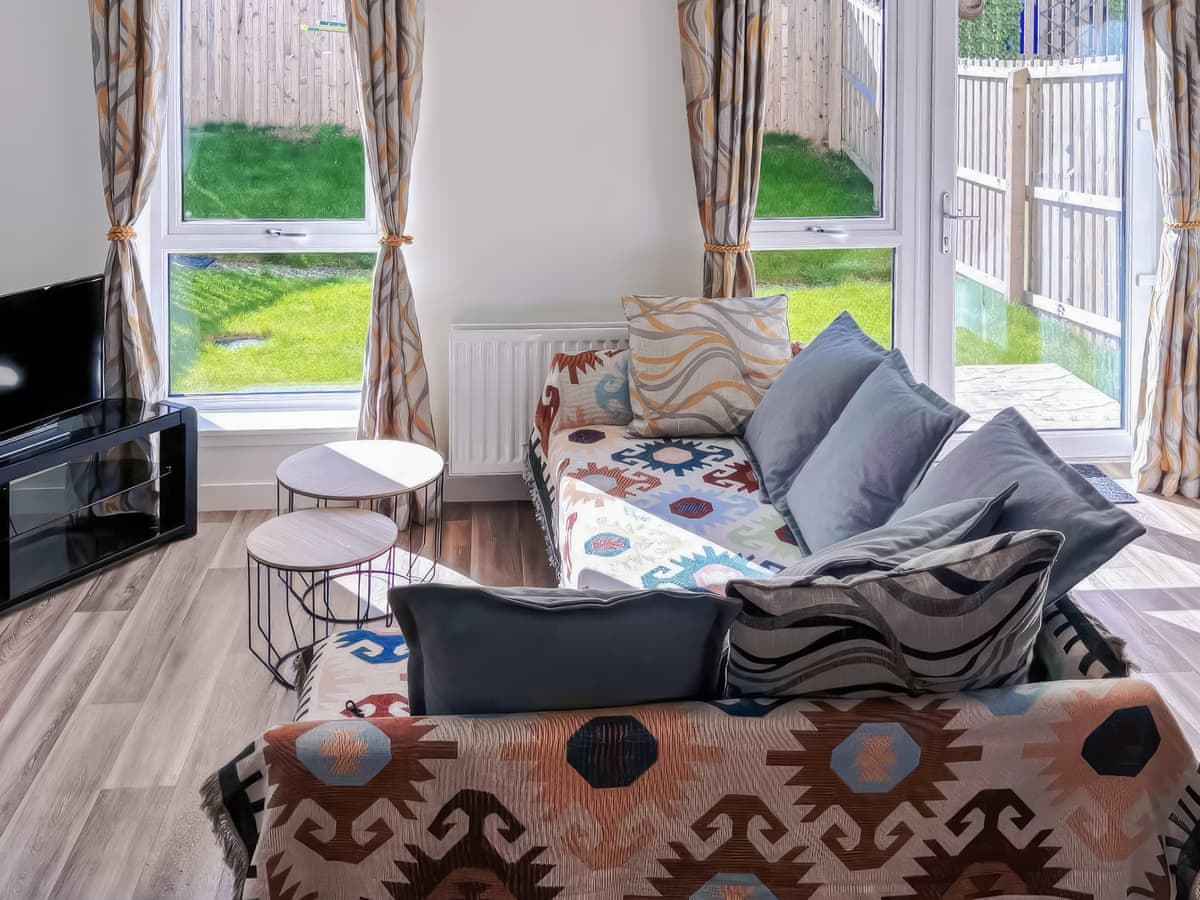
Somewhere to steady the nerves


Culloden Battlefield: your questions answered
Is Culloden Battlefield haunted? +
Culloden Battlefield is reportedly one of the most haunted places in Scotland. On the anniversary of the battle, 16 April, the sounds of fighting are said to be heard across the moor, a tall Highlander who whispers "defeated" is reported among the clan graves, and locals say birds do not sing there.
What happened at the Battle of Culloden? +
On 16 April 1746 the Jacobite army of Charles Edward Stuart was defeated in under an hour by government forces under the Duke of Cumberland on Drummossie Moor near Inverness. Around 1,000 to 1,500 Jacobites died, brutal reprisals followed across the Highlands, and it was the last pitched battle fought in Britain.
What is the Well of the Dead at Culloden? +
The Well of the Dead is a spring on the battlefield, marked by a carved stone, where wounded Jacobites reportedly crawled for water after the battle and died. Tradition says Alexander MacGillivray of Dunmaglass, chief of Clan Chattan, was among those who died beside it.
Can you visit Culloden Battlefield? +
Yes. The battlefield is owned by the National Trust for Scotland and can be walked freely, with the clan graves, memorial cairn and Leanach Cottage all accessible. The visitor centre, with its museum and immersive battle theatre, charges admission; check the Trust's website for current opening times.
Can you stay overnight at Culloden Battlefield? +
No, there is no accommodation on the battlefield and no overnight vigils are permitted. Inverness is about ten minutes away by car with hotels and guest houses at every price, and there are B&Bs and holiday cottages around Culloden village, the Moray Firth and Nairn.
Where is Culloden Battlefield? +
Culloden Battlefield is on Drummossie Moor about five miles east of Inverness in the Scottish Highlands, signposted from the A9 and reached via the B9006. There is a large car park at the visitor centre, and local buses run from Inverness city centre.
Your experiences at Culloden Battlefield
Been on the tour, stayed the night, felt the cold spot for yourself? Tell the next visitor what happened — and if nothing did, that counts too.
No visitor stories yet — been to Culloden Battlefield? Yours would be the first.
Log in or create a free account to share your experience — accounts also save your trips and credit your photos.
More haunted places near Inverness
Within 40 miles — enough for a haunted weekend tour.

👻 Haunted place · Aviemore · 20.4 mi
Castle Grant
Castle Grant stands a mile north of Grantown-on-Spey and was the former seat of the Clan Grant chiefs of Strat...

👻 Haunted place · Inverness · 27.9 mi
Dornoch Castle
Dornoch Castle is situated opposite Dornoch Cathedral in the town of Dornoch, Scotland.

👻 Haunted place · Aviemore · 33.2 mi
Scotland
Scotland is a country that is part of the United Kingdom, consisting of the northern part of the island of Gre...
Sources and further reading
- The Ghosts of Culloden Moor: Lost Soldiers on the Battlefield — Icy Sedgwick
- Culloden Battlefield — Mysterious Britain & Ireland
- The Ghosts of Culloden Moor, Inverness — Haunted Rooms
- Culloden Battlefield — National Trust for Scotland
- Battle of Culloden — National Army Museum
- The MacGillivrays at Culloden — Culloden Battlefield (NTS blog)
- Iconic cottage at Culloden Battlefield to open to public — The Scotsman
Researched by the BritStays Haunted Britain team; last updated 13 September 2026. Spotted something we've got wrong, or have your own story from Culloden Battlefield? We'd love to hear it.